
vibrating feeder for crushers for sale
Vibrating Feeders for Crushers: A Key to Efficient Crushing Operations
Vibrating feeders are indispensable equipment in aggregate and mining operations, serving as the critical link between the raw material supply and primary crushers. Their primary function is to regulate the feed rate of bulk materials—such as rocks, ores, and gravel—into the crusher in a consistent and controlled manner. This article provides an overview of vibrating feeders for crusher applications, explores key selection criteria, presents a real-world case study, and addresses common questions for those considering their purchase. Proper selection and use of a vibrating feeder directly impact crusher efficiency, reduce equipment wear, and optimize overall production throughput.
Core Functions and Benefits
A vibrating feeder performs several vital roles:
- Controlled Feed Rate: It ensures a steady, pre-determined volume of material enters the crusher, preventing both overload (which can cause blockages and damage) and underload (which leads to idle running and inefficient crushing).
- Pre-Screening: Grizzly sections (rods or grids) integrated into many feeder designs allow fine materials to bypass the crusher, increasing system capacity and reducing unnecessary wear.
- Material Distribution: It spreads material evenly across the full width of the crusher inlet, promoting uniform wear on crusher liners and improving crushing performance.
- Dampening Impact: By absorbing some of the shock from large dumped loads (e.g., from haul trucks or loaders), it protects the crusher from direct impact damage.
Selecting the Right Vibrating Feeder: A Comparative Overview
Choosing the appropriate feeder depends on material characteristics, capacity requirements, and plant layout. The two most common types for heavy-duty crusher feeding are: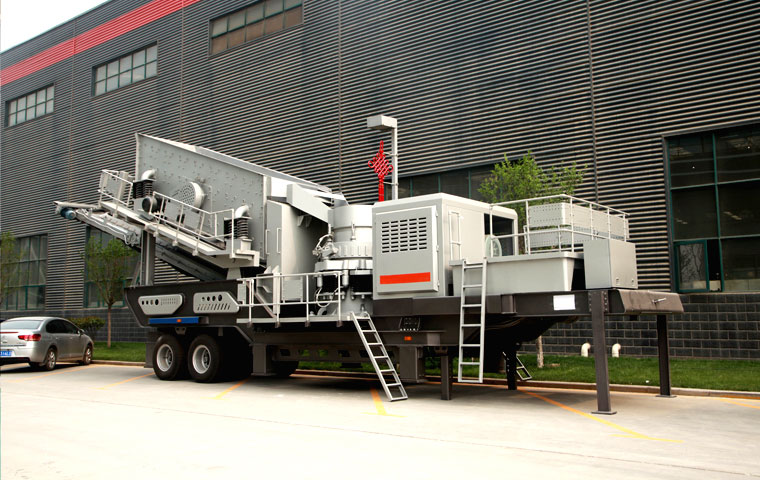
| Feature | Electromechanical Vibrating Feeder | Grizzly Feeder |
|---|---|---|
| Drive Mechanism | Uses rotating eccentric weights attached to an electric motor to generate linear vibration. | Typically uses brute force motors with eccentric shafts to generate high-intensity linear vibration. |
| Amplitude & Stroke | Fixed amplitude; stroke is adjustable by changing weight positions. | Generally offers a fixed, high-stroke amplitude designed for heavy-duty applications. |
| Best For | Controlled feeding of a wide range of materials where precise feed rate control is paramount. Often used for finer or more uniform materials. | Handling very large, bulky, and abrasive primary feed (e.g., run-of-mine ore, blasted rock). The integrated grizzly section scalps out fines. |
| Key Advantage | Energy-efficient, quiet operation with excellent controllability via variable frequency drives (VFD). | Robust construction capable of absorbing severe impact loads from large dump trucks. Effective scalping action. |
| Typical Application | Feeding secondary/tertiary crushers or conveying sorted materials. | Feeding primary jaw or gyratory crushers directly from a quarry face or dump pocket. |
Other types include electromagnetic feeders (for very precise, small-scale feeding) and apron feeders (for extremely heavy, hot, or abrasive materials where sliding motion is preferred).
Real-World Application Case Study: Limestone Quarry Upgrade
A large limestone quarry in the Midwest United States was experiencing frequent bottlenecks at its primary crushing station. The existing static hopper and direct dumping method led to uneven feed into the jaw crusher, causing periodic choking and uneven liner wear. Production targets were consistently missed.
Solution: The operation installed a heavy-duty vibrating grizzly feeder with the following specifications:
- Model: 60" x 20' Vibrating Grizzly Feeder.
- Feature: Integrated 6-inch nominal spacing grizzly bars on the first section.
- Drive: High-capacity brute force mechanism with adjustable counterweights.
Results:
- Throughput Increased: The regulated feed eliminated crusher choking, increasing average throughput by approximately 22%.
- Reduced Downtime: Unplanned downtime due to blockages was reduced by over 90%.
- Improved Crusher Life: Even material distribution extended jaw die life by an estimated 30%, reducing liner change-out frequency and cost.
- Pre-Screening Benefit: Approximately 15% of sub-6-inch fines were bypassed at this stage, diverting them directly to the secondary circuit and optimizing primary crusher utilization.
This investment paid for itself within eight months through increased production and lower maintenance costs.
Frequently Asked Questions (FAQ)
Q1: Can a vibrating feeder handle wet or sticky material?
A: While designed for free-flowing bulk solids, sticky materials pose a challenge as they can adhere to the pan or grizzly bars. Solutions include installing liners (UHMW polyethylene or AR steel), using heated decks for certain applications, or selecting a feeder with a higher stroke/amplitude to promote material dislodging. In extreme cases, an apron feeder might be recommended..jpg)
Q2: How is the feed rate controlled?
A: The most common and effective method is through a Variable Frequency Drive (VFD). By adjusting the motor's frequency (and thus vibration speed), operators can precisely control the feed rate from zero to maximum capacity manually or automatically based on crusher load signals.
Q3: What are the main maintenance points for a vibrating feeder?
A: Regular maintenance focuses on:
- Springs/Isolators: Inspecting for cracks or permanent set.
- Drive Unit: Checking bearings for lubrication and wear per manufacturer specs.
- Deck/Grizzly Bars: Inspecting for wear or cracking; replacing worn liners or bars.
- Bolts & Fasteners: Ensuring all structural and vibratory bolts remain torqued to specification due to constant vibration.
Q4: How do I determine the correct size/capacity I need?
A: Sizing requires specific data:
- Material characteristics (bulk density, lump size).
- Required maximum tons per hour (TPH).
- Desired hopper discharge opening dimensions.
- Overall plant layout constraints.
It is strongly advised to consult with reputable equipment suppliers who will use this data along with established engineering principles (like CEMA standards) to recommend a correctly sized model.
In conclusion,investing in a correctly specified vibrating feeder is not merely an add-on but a fundamental component for achieving an efficient,reliable,and profitable crushing circuit.Proper selection based on material,duty,and desired outcomes ensures maximized return on investment through enhanced productivity and reduced operational costs.