
goldfield mining equipment
Goldfield Mining Equipment: Essential Tools for Efficient Gold Extraction
Goldfield mining equipment plays a crucial role in the extraction of gold, whether in large-scale industrial operations or small-scale prospecting. These specialized tools are designed to maximize efficiency, durability, and recovery rates while minimizing environmental impact. This article explores key types of equipment, compares their features, and provides real-world examples of their application in modern mining.
Key Types of Goldfield Mining Equipment
Gold mining equipment varies depending on the scale of operations and the type of deposit (placer or hard rock). Below is a comparison of some essential machines:
| Equipment Type | Primary Use | Advantages | Limitations |
|---|---|---|---|
| Gold Trommels | Placer mining | High throughput, efficient material sorting | Requires water supply, limited to loose deposits |
| Gold Sluice Boxes | Small-scale prospecting | Low cost, easy to operate | Lower recovery rates for fine gold |
| Cyanidation Tanks | Large-scale gold processing | High recovery (>90%), suitable for refractory ores | Environmental risks, requires strict regulations |
| Metal Detectors | Prospecting & nugget hunting | Portable, detects gold at shallow depths | Limited to surface or near-surface deposits |
| Jaw Crushers | Hard rock crushing | Handles large ore volumes, durable | High energy consumption |
Real-World Application: The Case of Nevada Gold Mines
One of the most successful implementations of goldfield mining equipment is in Nevada, USA, where large-scale operations rely on a combination of crushing, heap leaching, and carbon adsorption. The Carlin Trend mines, operated by Nevada Gold Mines (a joint venture between Barrick Gold and Newmont), use: 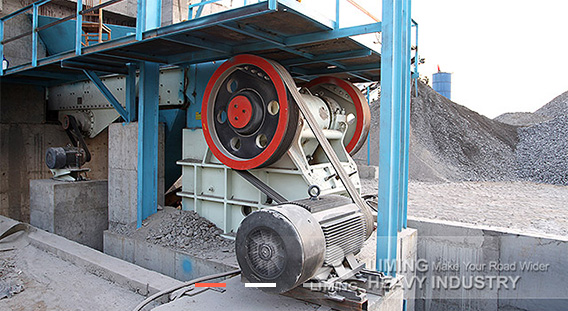
- Autogenous Grinding Mills to crush ore efficiently.
- Carbon-in-Leach (CIL) Tanks to maximize gold recovery.
- Advanced Screening Systems to reduce waste and improve processing rates.
This setup has helped the Carlin Trend become one of the most productive gold mining regions in the world, yielding over 84 million ounces since 1965.
Frequently Asked Questions (FAQs)
1. What is the most cost-effective gold mining equipment for beginners?
For small-scale miners, sluice boxes and metal detectors are the most affordable options, with setups costing under $1,000. .jpg)
2. How does a gold trommel differ from a sluice box?
A trommel uses a rotating drum to separate gold from gravel, while a sluice relies on gravity and riffles to trap gold. Trommels are more efficient for larger operations.
3. Is cyanide leaching still widely used in gold mining?
Yes, cyanidation remains the dominant method for large-scale gold extraction, though alternatives like thiosulfate leaching are being explored for environmental reasons.
4. Can gold mining equipment be used for other metals?
Some tools, like crushers and sluices, can process other heavy metals (e.g., platinum, tungsten), but specialized equipment (e.g., flotation cells) may be needed.
5. What regulations apply to gold mining equipment in the U.S.?
The Clean Water Act and Mining Safety Laws dictate proper waste disposal, water usage, and worker safety standards for mining operations.
Conclusion
Goldfield mining equipment is essential for efficient and sustainable gold extraction. From simple sluices to industrial-scale cyanidation plants, the right tools can significantly impact productivity and profitability. Real-world examples, such as Nevada’s Carlin Trend, demonstrate how advanced equipment drives success in modern gold mining.