
mining jaw crusher design
Mining Jaw Crusher Design: A Comprehensive Overview
This article provides a detailed examination of the design principles, structural components, and operational considerations for mining-grade jaw crushers. It covers the fundamental mechanics of crushing, the key design parameters that influence performance, a comparative analysis of the two primary jaw crusher configurations, and practical insights into wear life and maintenance. The content is grounded in established engineering practices and industry standards, with a focus on how design choices directly impact throughput, energy efficiency, and the total cost of ownership in hard-rock mining applications.
1. The Core Design Philosophy: From Rock to Reduction Ratio
The design of a mining jaw crusher begins with a single, uncompromising objective: to reduce run-of-mine (ROM) ore, which can be up to 1.5 meters in diameter, to a discharge size of 150–300 mm in a single pass. This primary crushing stage sets the tone for the entire comminution circuit. Unlike secondary or tertiary crushers, the jaw crusher must absorb extreme impact loads, handle sticky or abrasive feed, and operate continuously under high vibration.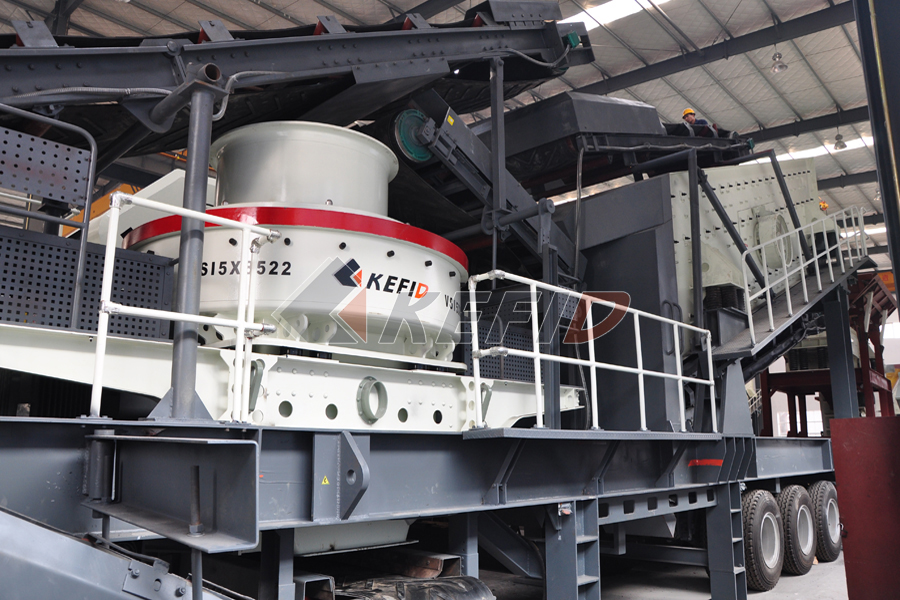
The fundamental design is a compression-type crusher, where the material is crushed between a fixed jaw plate and a moving (swinging) jaw plate. The moving jaw is mounted on a pitman, which is driven by an eccentric shaft. As the shaft rotates, the pitman moves up and down, creating a "crushing stroke" that compresses the rock against the fixed jaw. The design must balance two opposing forces: maximum compressive force to fracture the hardest rock, and minimal mechanical stress on the frame and bearings to ensure longevity.
Key design inputs that dictate the geometry are:
- Feed Opening (Gape): The width and depth of the crushing chamber. A wider gape allows larger feed, but increases the required frame strength.
- Closed Side Setting (CSS): The narrowest gap between the jaws at the discharge point. This determines the product size.
- Throw (Eccentricity): The total vertical travel of the moving jaw. A larger throw increases capacity but also increases power consumption and wear.
- Crushing Chamber Profile: The curvature of the jaw plates (typically a "straight" or "curved" profile) affects the nip angle—the angle between the fixed and moving jaw at the feed opening. The nip angle must be less than the friction angle of the material (typically 20–30 degrees) to prevent the rock from being ejected upward.
2. Structural Anatomy: The Frame, Pitman, and Bearings
A mining-grade jaw crusher is a heavy-duty machine, often weighing over 100 tons. Its design is divided into four critical structural zones:
The Frame: Traditionally fabricated from cast steel or welded from high-strength steel plates. Modern designs favor welded frames with stress-relieved heat treatment because they offer a higher strength-to-weight ratio than castings. The frame must be rigid enough to prevent deflection under load; even a 1 mm deflection at the bearing housing can cause premature bearing failure. The front frame (which holds the fixed jaw) and the rear frame (which holds the toggle plate seat) are connected by the side walls, forming a box-like structure that resists torsional forces.
The Pitman & Eccentric Shaft: The pitman is the vertical arm that carries the moving jaw. It is mounted on a large eccentric shaft, typically made of forged alloy steel (e.g., 42CrMo4). The eccentric portion of the shaft converts rotational motion from the drive pulley into the linear reciprocating motion of the pitman. The bearing arrangement is critical: spherical roller bearings are standard due to their ability to handle combined radial and axial loads. The bearings are housed in heavy-duty cartridge units, which allow for easier maintenance and replacement without dismantling the entire crusher.
The Toggle Plate & Tension Rod: This is the safety mechanism of the crusher. The toggle plate sits at the bottom rear of the pitman. When uncrushable material (e.g., a steel bolt) enters the chamber, the toggle plate is designed to break first, protecting the expensive frame and shaft from damage. The tension rod and spring hold the toggle plate in place and ensure the pitman returns to its forward position on the return stroke.
The Jaw Dies (Liners): These are the wear parts. Made from manganese steel (Hadfield steel, 12-14% Mn), they work-harden under impact. The profile of the dies is either corrugated (for coarse feed) or smooth (for finer discharge). The dies are reversible (top-to-bottom) to extend service life. The design of the die tooth profile directly influences the crushing efficiency; a "quarry tooth" profile is common for hard rock, while a "wave" profile is used for softer, stickier materials..jpg)
3. Comparative Analysis: Single Toggle vs. Double Toggle
There are two primary mechanical configurations for jaw crushers. The choice between them is a fundamental design decision based on the material hardness and the required throughput.
| Feature | Single Toggle Jaw Crusher | Double Toggle Jaw Crusher |
|---|---|---|
| Mechanism | The eccentric shaft is directly above the pitman. The pitman moves up and down, and the bottom of the jaw moves in an elliptical motion. | The eccentric shaft is located at the top rear. The pitman is connected to two toggle plates (front and rear), creating a purely vertical (compressive) motion at the jaw. |
| Crushing Stroke | Vertical and horizontal components; the horizontal stroke is greatest at the discharge point. | Almost purely vertical; the stroke is constant along the jaw height. |
| Wear Characteristics | Higher wear on jaw dies due to the sliding/grinding action of the elliptical motion. | Lower wear due to the straight compressive action. |
| Capacity | Higher throughput for the same feed opening, due to faster speed (250-350 RPM). | Lower throughput, but produces a more uniform product shape. |
| Maintenance | Simpler design, fewer moving parts, easier to maintain. | More complex, with more pivot points and bushings that require lubrication. |
| Best Application | Primary crushing of medium-hard to hard rock, where high capacity is prioritized. | Primary crushing of extremely hard, abrasive rock (e.g., granite, basalt) where wear life is the primary concern. |
| Power Consumption | Lower specific energy (kWh/ton) due to higher speed. | Higher specific energy due to slower speed (150-200 RPM) and higher torque. |
Design Verdict: For modern mining operations, the single toggle crusher dominates the market (over 90% of new installations) due to its higher throughput and lower capital cost. However, the double toggle design remains the preferred choice for operations processing extremely abrasive ores where the cost of manganese dies and downtime for change-outs outweighs the lower energy efficiency.
4. Real-World Case Study: Design Adaptation for a High-Altitude Copper Mine
The Challenge: A copper mine in the Chilean Andes (at 4,200 meters above sea level) required a primary crusher to handle 3,500 tonnes per hour of competent porphyry ore (UCS of 250 MPa). The initial design specified a standard single-toggle crusher with a 1.2m x 1.8m feed opening. However, the high altitude presented two specific design challenges:
- Reduced Air Density: At 4,200m, the air is thinner. This reduces the cooling efficiency of the electric motor and the hydraulic system. Standard motors would overheat.
- Viscosity of Lubricants: Standard mineral oils become too viscous at low temperatures (down to -10°C at night), leading to bearing starvation on startup.
The Design Solution:
- Motor Upgrade: The design was modified to use a high-altitude-rated motor with a larger cooling fan and a higher insulation class (Class F). The motor power was derated by 15% to account for the reduced air density, and the crusher speed was reduced from 300 RPM to 270 RPM to compensate for the lower power input while maintaining the same crushing force.
- Lubrication System: The standard grease lubrication was replaced with a forced oil circulation system using a synthetic ISO VG 220 oil. The system includes a pre-lubrication cycle that runs for 5 minutes before the crusher starts, ensuring all bearings are coated. The oil heater is thermostatically controlled to maintain a minimum temperature of 25°C in the reservoir.
- Chamber Profile: The jaw dies were redesigned with a deeper, non-choking profile. The original straight profile caused "packing" (material jamming) with the blocky porphyry ore. The new curved profile allowed the material to break more efficiently, reducing the peak crushing force on the frame by 12%.
Result: The modified crusher achieved a throughput of 3,400 tph (within 3% of target) with a wear life of 6 months on the fixed jaw die, matching the mine's scheduled maintenance shutdown. The forced oil system eliminated all bearing failures in the first year of operation, compared to an average of 2 failures per year on the previous, non-modified crusher.
5. Design for Serviceability: The Hidden Cost Driver
The best jaw crusher design is worthless if it cannot be maintained quickly. Downtime in a mine costs $50,000 to $100,000 per hour. Therefore, modern design focuses heavily on reducing Mean Time To Repair (MTTR) .
- Hydraulic CSS Adjustment: Older designs required manual shim placement behind the toggle plate. Modern designs use hydraulic cylinders to adjust the CSS in minutes, without stopping the crusher. This allows the operator to compensate for jaw die wear on the fly.
- Split Frame Design: For very large crushers (above 1.5m gape), the frame is designed in two or three pieces, bolted together. This allows the crusher to be transported underground or through tunnels without complete disassembly of the shaft and bearings.
- Lifting Points and Maintenance Platforms: Design engineers now integrate permanent lifting lugs and walkways into the crusher structure. This eliminates the need for temporary scaffolding, which is a major safety hazard and time sink.
6. Frequently Asked Questions (FAQ)
Q1: What is the difference between a jaw crusher's "Gape" and "Width"?
The Gape is the distance between the fixed and moving jaw plates at the top (feed opening). The Width is the dimension perpendicular to the gape, i.e., the length of the crushing chamber from side to side. The feed size is limited by the gape, while the capacity (tonnes per hour) is directly proportional to the width. A crusher described as "30x42" has a 30-inch gape and a 42-inch width.
Q2: How does the Closed Side Setting (CSS) affect the product gradation?
The CSS is the smallest gap at the discharge. A smaller CSS produces a finer product but reduces throughput. For example, reducing the CSS from 150mm to 100mm on a 1.2m gape crusher will reduce capacity by approximately 20% but will increase the percentage of material passing the 50mm screen from 30% to 45%. The CSS is the primary control variable for the downstream secondary crusher.
Q3: Why is manganese steel used for jaw plates instead of hardened tool steel?
Manganese steel (12-14% Mn) has a unique property: it work-hardens under impact. When the rock hits the surface, the surface layer becomes harder (up to 550 HB) while the core remains tough and ductile. This prevents catastrophic cracking. Tool steel (e.g., D2) is harder initially but is brittle and will fracture under the high impact loads of primary crushing. Manganese steel also has a higher toughness to resist the bending stresses of the crushing stroke.
Q4: Can a jaw crusher be used for recycling concrete and asphalt?
Yes, but the design must be modified. Standard mining jaw crushers are too heavy and slow for recycling. A recycling-specific jaw crusher uses a smaller gape, a faster speed (400-450 RPM), and a hydraulic release system to handle rebar and wire mesh. The jaw dies are typically made of a high-chrome iron (not manganese) to resist abrasion from concrete, but they are more brittle. The toggle plate is designed to break more easily to protect the crusher from tramp metal.
Q5: What is the typical lifespan of a jaw crusher frame?
With proper maintenance and no major impact events (e.g., a broken toggle plate that wasn't replaced), a welded steel frame can last 20 to 30 years. The main wear items are the jaw dies (changed every 1-3 months), the toggle plate (changed every 6-12 months), and the bearings (replaced every 3-5 years). The frame itself is usually only replaced if it suffers a fatigue crack, which is often caused by improper tensioning of the toggle plate or excessive vibration from a worn eccentric shaft.
Conclusion: The design of a mining jaw crusher is a balance of metallurgy, kinematics, and mechanical engineering. It is not a "one-size-fits-all" machine. The selection of a single vs. double toggle, the choice of manganese grade, and the configuration of the lubrication system must be tailored to the specific ore characteristics and the operational environment. As mines push deeper and process harder ores, the trend is toward larger, more robust crushers with intelligent monitoring systems that predict wear and prevent catastrophic failure, ensuring that the first step in the comminution process remains the most reliable one.