
mini cement plant price tag
Mini Cement Plant Price Tag: A Practical Guide to Costs, Configurations, and ROI
When you search for “mini cement plant price tag,” you are likely looking for a realistic budget figure, not a vague range. This article breaks down the actual cost drivers—from equipment selection to civil works—and provides a comparative analysis of 100–300 TPD (tonnes per day) plants. We will also look at a real-world installation in East Africa to show how the final invoice is assembled, and answer the most common questions buyers ask before signing a purchase order.
1. The Baseline Price: What Does “Mini” Actually Cost?
A turnkey mini cement plant (clinker grinding + packing, excluding kiln) typically costs $1.2 million to $4.5 million for a 100–300 TPD capacity. If you include a rotary kiln for full clinker production (raw mill + kiln + cement mill), the tag jumps to $6 million to $15 million. These figures are based on recent quotations from Chinese and Indian EPC suppliers (e.g., Pengfei Group, CHANGSHA, and Laxmi Engineers) for standard equipment packages, not custom engineering.
The single biggest price variable is whether you burn clinker on-site or buy it. A grinding-only plant (using purchased clinker) is 60–70% cheaper than a full pyro-processing line. The table below illustrates this split.
2. Cost Comparison: Grinding Plant vs. Full Kiln Line (100 TPD Example)
| Cost Component | Clinker Grinding Unit (No Kiln) | Full Mini Plant (With Kiln) |
|---|---|---|
| Main equipment (ball mill, separator, packing) | $450,000 – $700,000 | $1.8M – $2.5M (includes kiln, preheater, cooler) |
| Civil works & steel structure | $150,000 – $250,000 | $800,000 – $1.2M (kiln foundation, tall preheater tower) |
| Electrical & automation | $80,000 – $120,000 | $350,000 – $500,000 (more drives, DCS system) |
| Installation & commissioning | $100,000 – $150,000 | $400,000 – $600,000 (longer erection time, kiln alignment) |
| Total (turnkey, excluding land & working capital) | $780,000 – $1.22M | $3.35M – $4.8M |
Note: Prices are FOB + installation for a standard 100 TPD plant in a flat, accessible site. Freight, customs, and site preparation (e.g., rock blasting) are additional.
The gap is not just equipment. A kiln line requires a preheater tower (often 30–40 meters tall), a clinker cooler, and a coal/fuel grinding system. These add structural steel tonnage and electrical load, which directly inflates the price tag.
3. Hidden Cost Drivers That Change the Tag
Beyond capacity, four factors move the final number by ±30%:
- Raw material moisture: If your limestone has >8% moisture, you need a drying system (or a vertical roller mill with hot gas generator). This adds $150,000–$300,000. Most African and South Asian projects face this.
- Power supply reliability: A mini plant needs 3–5 MW. If you rely on diesel gensets (common in Nigeria or Kenya), add $0.12–$0.18 per kWh to operating cost, but also add $200,000–$400,000 for genset purchase vs. grid connection.
- Baghouse vs. ESP dust collection: A pulse-jet baghouse is cheaper ($40,000–$60,000) but has higher filter replacement costs. An electrostatic precipitator (ESP) costs $120,000+ but is better for high-resistivity dust. Most mini plants choose baghouses for cost reasons.
- Automation level: A manual control room (basic PLC) saves $50,000 vs. a full DCS with online quality analyzers. However, manual operation increases labor cost by 3–4 operators per shift.
4. Real Case: 150 TPD Grinding Plant in Tanzania (2023)
Client profile: A local building materials distributor in Dar es Salaam wanted to produce OPC 42.5N from imported clinker (from India) and local gypsum.
Scope: Supply of a 150 TPD closed-circuit ball mill (φ2.4 × 8m), a dynamic separator, a rotary packer (4 spouts), a baghouse, and a 10-ton overhead crane. Civil works were done by the client’s own contractor..jpg)
Final price tag: $1.35 million (equipment + supervision + commissioning). Breakdown:
- Mill & separator: $620,000
- Packing & conveying: $180,000
- Electrical & control panel: $140,000
- Steel structure & chutes: $90,000
- Commissioning & training: $60,000
- Freight (Mumbai to Dar es Salaam): $260,000 (this was 19% of the total—often underestimated)
Timeline: 7 months from order to first bag. The client achieved a payback of 18 months based on a selling price of $95/ton vs. a production cost of $68/ton (including clinker at $55/ton CIF).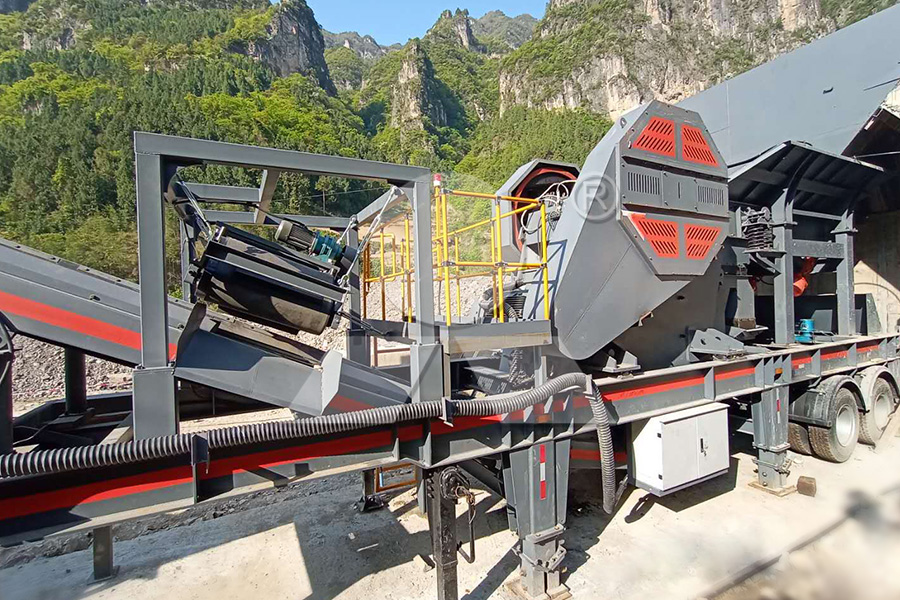
Lesson: The freight and logistics cost for a mini plant in a landlocked country can be higher than the equipment itself. Always request a CIF quote (cost, insurance, freight) not just FOB.
5. How to Negotiate the Price Tag Down (Without Losing Quality)
- Buy a second-hand kiln shell (from a decommissioned plant in Europe) and pair it with new auxiliary equipment. This can cut the kiln line cost by 40%. However, expect a longer lead time for inspection and reconditioning.
- Bundle orders: If you plan a second line later, negotiate a framework agreement. Suppliers often give 5–8% discount for a repeat order commitment.
- Use local fabrication for non-critical parts: Tanks, platforms, and simple chutes can be made locally (e.g., in Kenya or Vietnam) at 50% of the imported price. Only the mill, kiln, and separator need to be imported.
- Choose a standard design: Avoid custom capacities (e.g., 120 TPD). Stick to 100, 150, 200, or 300 TPD. Standard designs have cheaper spare parts and faster delivery.
6. Frequently Asked Questions (FAQ)
Q1: What is the minimum budget for a mini cement plant that makes clinker?
A: For a 100 TPD full kiln line, expect a minimum of $3.5 million (turnkey, excluding land and working capital). Below this, suppliers are likely cutting corners on the preheater or cooler, which will cause high heat consumption (over 850 kcal/kg) and poor clinker quality.
Q2: Can I start with a grinding plant and add a kiln later?
A: Yes, but plan the layout from day one. Leave space for a kiln, a raw mill, and a coal mill. Also, oversize the cement mill motor and the baghouse to handle future capacity. This adds about 10% to the initial cost but saves $200,000 in rework later.
Q3: How much does a 200 TPD plant cost compared to a 100 TPD?
A: Not linear. A 200 TPD plant costs roughly 1.6–1.8 times a 100 TPD plant, not 2 times. The reason is that the kiln and mill sizes increase, but the civil works, electrical room, and packing plant are shared. For example, if a 100 TPD full line is $4M, a 200 TPD line is around $6.5–7M.
Q4: Are Chinese mini plants cheaper than Indian or European ones?
A: Chinese equipment (e.g., Jiangsu Pengfei, Sinoma) is typically 15–20% cheaper than Indian (Laxmi, KHD) for the same capacity. European (e.g., FLSmidth, ThyssenKrupp) is 2–3 times higher but offers better energy efficiency (e.g., 70 kWh/ton vs. 85 kWh/ton for grinding). For a mini plant, the payback on European efficiency is rarely justified unless electricity costs exceed $0.20/kWh.
Q5: What is the typical lead time from order to production?
A: For a grinding plant: 5–7 months (including manufacturing, shipping, and 6 weeks of erection). For a full kiln line: 10–14 months. The longest item is the kiln shell and the preheater cyclone fabrication, which takes 4–5 months in the factory.
Final word: The “price tag” is only the beginning. The real cost is the cost per ton of cement produced over 10 years. A slightly more expensive plant with a vertical roller mill (VRM) instead of a ball mill can save $1.5–$2.0 per ton in power. On a 100,000-ton annual output, that is $150,000–$200,000 per year—enough to justify a $500,000 higher initial investment. Always ask for a lifecycle cost analysis from your supplier, not just a quote.