
machine produces crushed granite
The Complete Guide to Crushed Granite Production: How Modern Machines Turn Rock into Aggregate
Crushed granite is the backbone of modern construction, used in everything from concrete foundations and asphalt roads to railway ballast and landscaping. The process of transforming massive, solid granite boulders into precise, multi-sized aggregate fractions is entirely dependent on a specialized sequence of crushing and screening machinery. This article provides a direct overview of the machines used in a granite crushing plant, their specific functions, the critical difference between crushing stages, and answers to common operational questions. We will also examine a real-world processing solution to illustrate how these components work in tandem.
The Core Machinery: From Jaw Crusher to Final Screen
A typical stationary or mobile granite crushing plant does not rely on a single machine. Instead, it operates as a multi-stage system. Each stage has a distinct purpose, primarily defined by the reduction ratio (the ratio of feed size to output size) and the type of force applied (compression vs. impact). Granite is a hard, abrasive, igneous rock with high silica content, which means the equipment must be designed for high wear resistance.
The primary stages and their machines are as follows: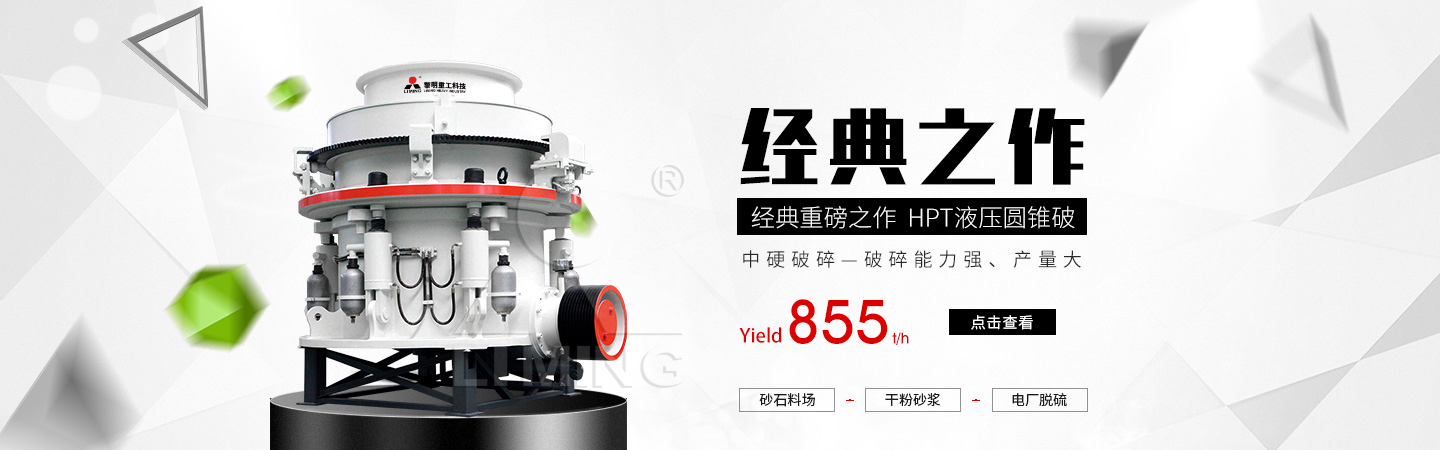
| Stage | Primary Machine | Core Function | Typical Output Size | Key Characteristic |
|---|---|---|---|---|
| 1. Primary Crushing | Jaw Crusher | Reduces blasted rock (up to 1 meter) to 150-200 mm. | 150–250 mm | High compression force; handles large, blocky feed; low operational cost per ton. |
| 2. Secondary Crushing | Cone Crusher | Reduces 150 mm feed to 40-60 mm aggregate. | 40–80 mm | Uses compression via an eccentrically rotating mantle; ideal for hard, abrasive rock. |
| 3. Tertiary Crushing | Cone Crusher (Short Head) or VSI (Vertical Shaft Impactor) | Produces fine aggregates (sand) and improves particle shape. | 0–20 mm | VSI uses rock-on-rock impact to crush and shape; critical for producing cubical material for asphalt. |
| 4. Screening | Vibrating Screen | Separates crushed material into different size fractions (e.g., 0-5mm, 5-10mm, 10-20mm). | N/A (Sorts by size) | Uses multiple decks with specific mesh sizes to ensure product consistency. |
Why not use an Impact Crusher for primary crushing?
While impact crushers are cheaper, they rely on impact force which is inefficient and causes severe wear on the blow bars when processing high-silica granite. Jaw and cone crushers use compression, which is the most energy-efficient and wear-resistant method for this specific rock type.
The Critical Role of the Cone Crusher in Granite Processing
While the jaw crusher does the heavy lifting, the cone crusher is the workhorse that determines the quality of the final product. Granite is highly abrasive; therefore, the crushing chamber design is crucial. Modern cone crushers utilize a "hydroset" system that allows the main shaft to rise and fall, adjusting the closed side setting (CSS) to control output size. This system also provides overload protection: if a non-crushable object (like a steel bolt) enters the chamber, the pressure increases, causing the cone to drop and release the object, preventing catastrophic damage to the main frame.
The efficiency of a cone crusher is measured by its "flakiness index." A high-quality cone crusher with a proper "stroke" and "throw" will produce a cubical shape, which is essential for concrete aggregate because flat or elongated particles weaken the mix.
Real-World Case Study: A 200 TPH Granite Processing Plant
To understand how these machines integrate, consider a standard fixed plant designed for a 200 tons-per-hour (TPH) output, a common configuration for commercial quarries.
The Scenario: A quarry in a hard-rock region needed to produce 0-5mm, 5-10mm, and 10-20mm aggregates for a local highway project. The feed material was blasted granite with a maximum size of 700mm.
The Solution (Equipment Flow):
- Feeding: A vibrating grizzly feeder (with a 100mm gap) receives the blasted rock. The grizzly allows fines (dirt and small rock) to fall through, bypassing the primary crusher, which prevents clogging and increases efficiency.
- Primary Stage: The 700mm rock enters a PE-750x1060 Jaw Crusher. The CSS is set to 100mm, reducing the rock to a size range of 0-150mm.
- Secondary Stage: The 0-150mm material is conveyed to a Screening Tower. A double-deck screen removes the 0-40mm fraction (which goes directly to the tertiary stage) and sends the 40-150mm fraction to a Cone Crusher (e.g., PYB-1750) . This cone crushes the material down to 0-60mm.
- Tertiary Stage (Closed Circuit): The output from the cone crusher is recirculated back to the screen. The screen now separates the material into final products: 0-5mm (manufactured sand), 5-10mm, and 10-20mm. Any material larger than 20mm is sent back to the cone crusher for another pass. This "closed circuit" ensures that no oversized material leaves the plant.
The Result: The plant achieved a consistent production rate of 200 TPH. The use of a jaw crusher for primary and a cone crusher for secondary/tertiary stages kept wear costs below $0.15 per ton of finished product, which is significantly lower than using an impact crusher for the same task. The final aggregate passed the flakiness index test required by the local highway authority.
Operational Considerations and Wear Management
Running a granite crushing plant is a balance between production volume and wear costs. The main wear parts are the jaw plates, cone mantles, and concave liners. These are typically made of Manganese steel (12-14% Mn) which work-hardens under impact..jpg)
- Monitoring: Operators must check the "wear profile" of the cone liner daily. If the liner wears unevenly, the crusher's output shape deteriorates, and capacity drops.
- Setting Adjustment: As liners wear, the CSS increases, leading to coarser output. Operators must compensate by adjusting the hydraulic setting to maintain the target product size.
- Moisture Content: Granite is generally dry, but if the feed contains excessive fines or clay from the overburden, it can clog the vibrating screens. In such cases, a washing system (water spray bars) is added to the screen to remove the fines.
Frequently Asked Questions (FAQ)
1. What is the difference between a mobile and a stationary granite crusher?
A stationary plant is designed for long-term, high-volume production (over 500,000 tons per year) and requires significant civil engineering work (concrete foundations). A mobile plant (on tracks or wheels) is ideal for short-term projects, recycling, or quarries with multiple extraction sites. Mobile plants are more expensive per ton of production but offer flexibility and lower setup costs.
2. Can I use a VSI crusher to replace a cone crusher for granite?
Yes, but only for the tertiary stage. A VSI (Vertical Shaft Impactor) is excellent for producing fine sand and improving the cubical shape of the final product. However, using a VSI to crush large 100mm rock is inefficient and will destroy the rotor tips quickly. The standard practice is: Jaw (Primary) -> Cone (Secondary) -> VSI (Tertiary, optional for sand shaping).
3. How do I calculate the required capacity for my granite crushing plant?
You must calculate the "reduction ratio" and the "throughput." For example, if you need 100 TPH of 0-20mm final product, and your feed is 500mm, you cannot crush this in one step. You need to calculate the capacity of each stage based on the feed size distribution. A rule of thumb is that the primary crusher should have a capacity 20-30% higher than the final product requirement to account for recirculation loads in the closed circuit.
4. Why does my cone crusher produce too many flat or elongated particles?
This is usually caused by a worn mantle or an incorrect "eccentric throw." If the throw is too low, the material is not compressed enough and will break along its natural cleavage planes, creating flat pieces. Ensure the crusher is operating at the recommended "stroke" and that the feed is distributed evenly around the crushing chamber (not just on one side).
5. What is the average lifespan of the wear parts in a granite crusher?
This depends on the abrasiveness of the granite (Silica content). For a standard jaw crusher, the fixed and movable jaw plates may last between 3 to 6 months in a single shift operation. Cone crusher liners (mantle and concave) typically last 4 to 8 weeks, depending on the CSS setting. Tighter settings (finer output) increase wear exponentially. Regular rotation of the liners can extend their life by up to 30%.