
claculating vibrating screen area
The Definitive Guide to Calculating Vibrating Screen Area for Optimal Performance
In the world of bulk material processing, from mining and aggregates to food and pharmaceuticals, the vibrating screen is a workhorse. Its primary function is simple: to separate materials by size. However, the engineering behind achieving this efficiently and cost-effectively is anything but simple. At the heart of every successful screening operation lies a critical calculation: determining the correct screen area.
An undersized screen will lead to premature blinding, reduced throughput, and poor product quality as undersized particles are not effectively removed. An oversized screen, while solving the capacity issue, represents a significant and unnecessary capital expenditure, consumes more power, and takes up valuable floor space.
This guide delves into the fundamental principles and practical steps for accurately calculating the required vibrating screen area for your application.
1. The Core Principle: The Basic Formula
At its simplest, the required screen area can be expressed by a fundamental formula:
A = (Q / (C F M L P O))
Where:
A = Required Screen Area (in square meters or square feet)
Q = Feed Rate to the Screen (in tons per hour or tonnes per hour)
The other factors are correction multipliers that account for the specific conditions of your application. Understanding each of these variables is key to an accurate calculation.
2. Deconstructing the Variables: The Real-World Factors
Let's break down each component of the formula beyond its symbol.
a) C - Basic Capacity
This is not a single number but a baseline value found in manufacturer tables. It represents the throughput (in tons per hour per square foot or TPH/m²) for a standard material—typically well-graded, dry crushed stone—under ideal conditions with 100% efficiency (a theoretical concept). This value varies dramatically based on:
Screen Opening Size: Smaller apertures have lower basic capacities because it's harder for particles to find and pass through the hole.
Material Weight: Heavier materials (like iron ore) have a higher basic capacity by weight than lighter materials (like wood chips) for the same volumetric flow.
b) F - Factor for Oversize
The feed material is not uniform. This factor accounts for the volume of material that does not pass through the screen deck but must travel across it to be discharged. A feed with 40% oversize material will behave very differently from one with only 10% oversize. Higher percentages of oversize reduce the effective screening area and thus require a larger deck.
c) M - Factor for Middlings
Middlings are particles that are near the size of the screen opening. These "near-size" particles are the most difficult to separate as they can easily plug apertures or "peg" in them without passing through. An abundance of middlings (e.g., more than 20% of the feed being within 10% of the screen aperture size) significantly reduces efficiency and requires a larger screen area or specialized deck types.
d) L - Factor for Deck Location
In a multi-deck screen, each lower deck operates under different conditions.
The top deck handles the full feed load but typically has large openings.
The bottom deck receives material that has already passed through the top deck. While its load is reduced, it is also handling finer material with smaller openings and often has less stratification (the process where finer particles settle to the bottom). Therefore, each successive lower deck is typically assigned a lower efficiency factor.
e) P - Factor for Particle Shape
Not all particles are cubic. Rounded sand grains will screen much more efficiently than sharp, flaky mica or elongated pieces of wood fiber. Irregularly shaped particles pass through apertures less readily and can cause blinding more easily.
f) O - Other Application Factors
This is a catch-all category for environmental and operational conditions.
Moisture & Clay Content: Even small amounts of moisture or sticky clay can bind fine particles together, dramatically reducing screening efficiency.
Screen Motion: Is it a circular motion? A linear stroke? A high-frequency elliptical motion? Each type promotes different particle behavior and stratification.
Deck Type & Open Area: A wire mesh deck might have a 50% open area, while a polyurethane panel might only have 25% for the same aperture size due to thicker matting walls. A higher percentage of open area increases capacity.
Screen Inclination: Steeper screens move material faster but reduce retention time on the deck, which can hurt efficiency for difficult separations.
3. The Step-by-Step Calculation Process
1. Define Your Goal: Determine your desired feed rate (Q), your target separation size (which gives you your aperture size), and your required screening efficiency (e.g., 95%).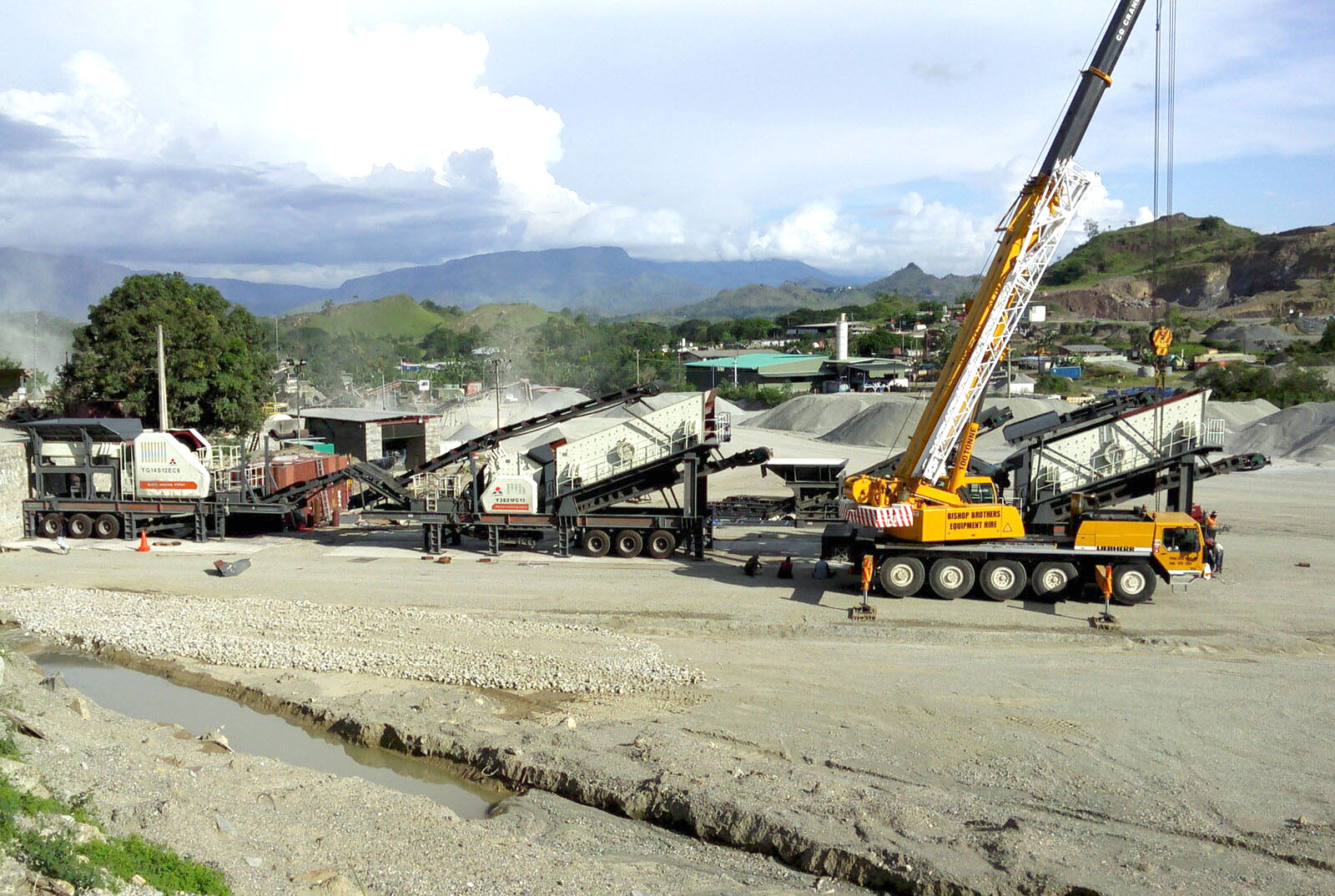
2. Gather Material Data: Perform sieve analysis on your feed material to determine its precise size distribution (% oversize, % middlings). Know its bulk density and characteristics like moisture content and particle shape.
3. Consult Capacity Tables: Use reputable manufacturer charts to find your Basic Capacity (C) based on your aperture size.
4. Select Correction Factors: Based on your material analysis from Step 2, select appropriate values for F, M, L (if applicable), P, and O from standard engineering tables provided by vendors like Metso, Terex, or Sandvik..jpg)
5. Perform The Calculation: Plug all your values into the formula.
Example:
Desired Feed Rate (Q) = 300 TPH
Basic Capacity (C) from chart = 2.5 TPH/ft²
Selected Factors: F=0.9 , M=0