
design of rock crusher
Design of Rock Crusher: An Overview of Principles, Types, and Applications
The design of a rock crusher is a critical engineering discipline that directly impacts the efficiency, cost, and product quality of mining, quarrying, and aggregate production. At its core, crusher design revolves around applying mechanical force to reduce large rocks into smaller fragments of desired size. This process involves fundamental principles of physics, material science, and mechanical engineering. Modern crusher design balances key parameters such as throughput capacity, product gradation (size distribution), energy consumption, wear resistance, and operational reliability. This article will explore the primary crusher types based on their crushing mechanisms, compare their characteristics, examine real-world applications through case studies, and address common questions in the field.
Core Crushing Mechanisms and Crusher Types
Rock crushers are primarily categorized by their method of applying compressive or impact forces..jpg)
- Jaw Crushers: Utilize two vertical manganese steel jaws—one stationary and one moving in an elliptical motion. Rock is crushed by the compressive force as it moves down the chamber until small enough to escape through the bottom opening (closed-side setting). Ideal for primary crushing of hard, abrasive materials.
- Gyratory Crushers: Function similarly to jaw crushers but consist of a conical head gyrating within a larger conical bowl. They offer higher capacity and are typically used for primary crushing in high-tonnage mining operations.
- Cone Crushers: A secondary/tertiary crusher where rock is compressed between a rotating mantle and a stationary concave liner. They provide precise control over product size and are excellent for producing fine aggregates.
- Impact Crushers (Horizontal Shaft Impactor/HSI and Vertical Shaft Impactor/VSI): Utilize high-speed rotors with hammers or blow bars to throw rock against breaker plates (HSI) or anvils/rock shelves (VSI). They fracture rock along natural cleavage planes, producing a more cubical product ideal for concrete and asphalt aggregates.
Comparative Analysis of Primary Crusher Types
The selection between a jaw and a gyratory crusher for primary crushing depends on specific operational requirements.
| Feature | Jaw Crusher | Gyratory Crusher |
|---|---|---|
| Capital Cost | Lower | Higher |
| Installation & Maintenance | Simpler; accessible from top | More complex; requires infrastructure |
| Feed Size Handling | Better at handling slabby material | Requires more uniform feeding |
| Capacity & Efficiency | Lower capacity; higher energy/ton at large scale | Higher capacity; more energy-efficient for high tonnage |
| Typical Application | Mid-size quarries, underground mining, portable plants | Large-scale open-pit mines, stationary primary stations |
(Source: Industry guidelines from organizations like Metso Outotec and Sandvik)
Key Design Considerations
- Chamber Geometry: The shape of the crushing chamber determines compression ratio, throughput, and wear life.
- Kinematics: The motion path of the crushing element (e.g., swing jaw motion) affects capacity and liner wear.
- Material & Wear Parts: Manganese steel remains standard for liners due to its work-hardening property. Design must allow for easy replacement.
- Drive System & Power: Robust bearings, sheaves/v-belts or direct drives must transmit sufficient torque to handle peak loads.
- Safety & Maintenance: Designs must incorporate safety guards, hydraulic adjustment systems for settings (CSS), and tramp release systems to protect against uncrushable material.
Real-World Case Study: Cone Crusher Optimization in Granite Quarry
A granite quarry in Scandinavia was facing premature wear on cone crusher mantles and concaves (lasting only 450k tons) and inconsistent product shape for high-value asphalt chips.
Problem: High silica content in the granite caused abrasive wear. An aggressive cavity design led to poor particle shape control.
Solution & Design Application: The operator collaborated with the manufacturer to implement: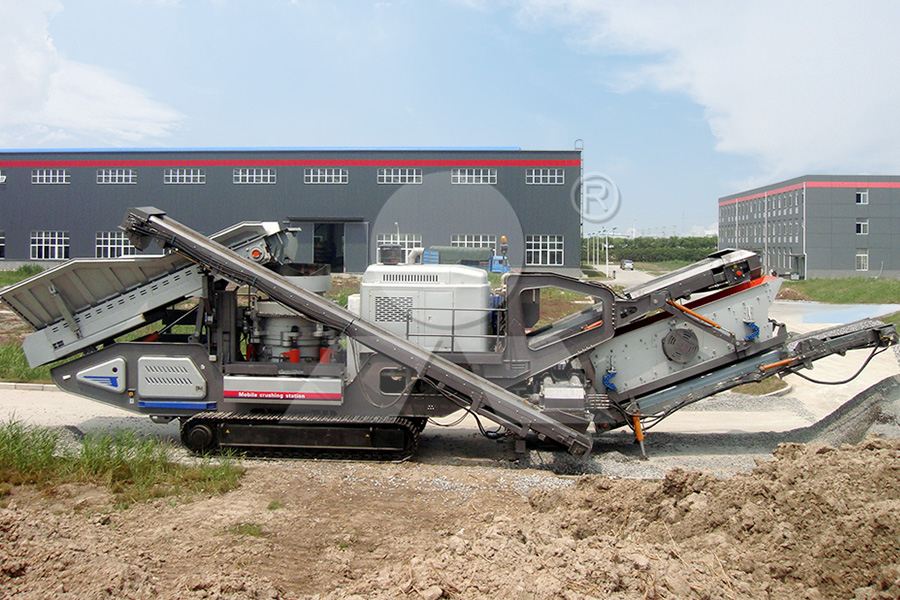
- A redesigned crushing chamber profile ("fine" cavity) optimized for chip production rather than general ballast.
- A new grade of manganese steel alloy with enhanced micro-alloying elements for better abrasion resistance.
- Installation of an advanced automation system (like ASRi) to maintain a consistent closed-side setting (CSS) via hydraulic adjustment.
Result: Wear part life increased by over 35% (to approx. 610k tons), reducing downtime and cost per ton. The product cubicity improved significantly (+22% measured by flakiness index), meeting premium asphalt mix specifications without further processing.
Frequently Asked Questions (FAQ)
Q1: What is the single most important parameter in crusher design?
There is no single parameter; it is always a balance between capacity, product size, and wear cost. However, the "Closed-Side Setting" (CSS) is arguably the most critical operational parameter from a design perspective as it directly defines maximum product size output rate.
Q2: Why can't we just design one type of crusher for all applications?
Different rocks have different compressive strengths, abrasiveness (e.g., measured by Los Angeles Abrasion test), and cleavage characteristics. A single mechanism cannot efficiently handle all materials—compression crushers excel on hard/abrasive rock but produce more elongated particles while impactors are ideal for softer/less abrasive rock producing cubicle products but with higher wear costs on abrasive stone.
Q3: How does automation integrate into modern crusher design?
Modern designs incorporate sensors measuring power draw pressure CSS temperature Automation systems use this data to optimize performance For example they can automatically adjust CSS via hydraulics regulate feed rate via conveyor controls or perform unidirectional rotation on cone crushers to even out liner wear
Q4: Is there innovation beyond traditional steel in wear parts?
Yes Composite materials like ceramic-metal matrix composites are being tested for specific components Furthermore advanced metallurgy continues developing new micro-alloyed steels Polyurethane liners are also used in certain non-abrasive applications
Q5: How significant is sustainability in contemporary crusher design?
It's increasingly central Key focuses include reducing energy consumption per ton crushed which involves optimizing kinematics drive efficiency designing chambers for better "rock-on-rock" action where possible Using recycled manganese steel manufacturing processes water-free dust suppression systems are also part of sustainable design mandates