
blending methods for road sub base materails
Optimizing the Foundation: A Comprehensive Guide to Blending Methods for Road SubBase Materials
1. Industry Background: The Critical Role of the SubBase
The construction of a durable and longlasting road is a complex engineering feat, often compared to building a house. Just as a weak foundation leads to structural problems in a home, an inadequate subbase results in premature road failure, including cracking, rutting, and potholes. The subbase layer, situated between the natural subgrade (the insitu soil) and the base course, serves three critical functions:
Load Distribution: It spreads the concentrated loads from traffic wheels over a wider area of the weaker subgrade, preventing shear failure.
Drainage: It provides a capillary break and a pathway for water to drain away from the pavement structure, reducing the risk of waterinduced weakening.
Construction Platform: It offers a stable, working platform for construction equipment to operate on, regardless of weather conditions.
Traditionally, highquality, naturally occurring aggregates like crushed stone or gravel were used. However, with increasing environmental concerns, stringent regulations on quarrying, and rising material costs, the industry has been forced to innovate. This has led to the widespread adoption of blending—a process of mechanically combining different materials to create a composite that meets specific engineering specifications.
2. The Core of the Matter: Blending Methods and Material Science
Blending is not merely mixing; it is a precision engineering process aimed at achieving optimal gradation, strength, and durability. The goal is to create a wellgraded material where smaller particles fill the voids between larger ones, resulting in high density and shear strength.
Common Materials Used in Blending:
Virgin Aggregates: Highquality crushed rock or gravel.
Recycled Concrete Aggregate (RCA): Crushed demolition concrete.
Reclaimed Asphalt Pavement (RAP): Milled asphalt from old roads.
Quarry Byproducts: Crusher fines, quarry dust.
Marginal Native Soils: Locally available soils that are unsuitable alone but can be improved.
Industrial Byproducts: Such as slag from steel production or fly ash from coal power plants.
Key Engineering Properties Targeted by Blending:
1. Gradation: The particle size distribution must conform to specifications (e.g., AASHTO or local standards) to ensure proper compaction and drainage.
2. California Bearing Ratio (CBR): A measure of strength; blended materials must achieve a minimum CBR value (often > 30% for subbase).
3. Plasticity Index (PI): For finegrained components; low PI is essential to prevent swelling and shrinkage with moisture changes.
Primary Blending Methods:
1. InPlace/InSitu Blending:
This method involves blending materials directly on the construction site or within the road corridor.
Process: A stabilizer/reclaimer machine pulverizes the existing poor subgrade or spreads imported stabilizing agent (like lime or cement). It then mixes it with added aggregate in a single pass.
Equipment: Soil stabilizers, motor graders with mixing attachments.
Advantages:
Costeffective as it utilizes onsite materials.
Reduces trucking and material import/export.
Fast process for large areas.
Disadvantages:
Less precise control over final gradation.
Highly dependent on site conditions and moisture content.
2. Central Plant Blending:
This is a more controlled method where materials are blended in a fixed or mobile pugmill/mixing plant.
Process: Constituent materials are fed into the plant in predetermined proportions via conveyor belts and weigh feeders. They are mixed thoroughly with water and/or binders before being transported to the site.
Equipment: Pugmill mixers, continuous mix plants.
Advantages:
High degree of quality control and consistency.
Ability to produce complex blends with multiple components.
Homogeneous final product.
Disadvantages:
Higher initial setup cost.
Requires transportation of both raw materials and finished blend.
3. Window Mixing:
A hybrid approach often used for soil stabilization but applicable to blending aggregates with soils or fines.
Process: Materials are placed in overlapping windows using motor graders. A stabilizer machine then travels along the window, mixing the materials thoroughly. Binders can be added during this process.
Equipment: Motor graders, stabilizers.
Advantages:
Good control over mixing uniformity compared to basic insitu methods.
Efficient for linear projects like roads.
3. Market Applications & Economic Drivers
The market for blended subbase materials is driven by sustainability mandates and economic pragmatism.
Sustainability & Regulations: Governments worldwide are implementing "Green Public Procurement" policies that mandate the use of recycled content in public works projects. Using RAP and RCA helps projects earn credits in rating systems like LEED or CEEQUAL.
Cost Savings: Transporting virgin aggregates over long distances is expensive. Blending allows contractors to use locally available marginal soils or recycled materials significantly cheaper than virgin stone while meeting performance criteria on projects ranging from highways to residential streets and parking lots..
Performance Enhancement: In areas with problematic soils (e.g., expansive clays), blending with lime or cement not only creates a usable material but transforms it into a stronger, more stable foundation than native soil alone.
4.The Future Outlook
The future of subbase blending is intelligent and integrated:
1. Advanced Additives & Binders: Beyond traditional lime and cement, new geopolymer binders derived from industrial waste will gain prominence for their lower carbon footprint..
2. RealTime Process Control: Onboard sensors on stabilizers will measure moisture content and density in realtime,, automatically adjusting feed rates for water and binders via IoT connectivity..
3. (AI) & Machine Learning: AI models will analyze data from project sites (soil types,, weather,, performance history) to recommend optimal blend designs before construction even begins,, minimizing trialanderror..
4.. (C&D) Waste Utilization: As urban mining grows,, there will be an even greater push toward using 100% recycled blends,, turning waste streams directly into valuable construction resources..
5.Frequently Asked Questions (FAQ)
.jpg)
Q1: Can we use 100% RAP or RCA for subbase?
A: While possible,, it's often not recommended without modification.. RAP can be prone to deformation under heavy loads due to its asphalt content,, while RCA may contain sulfates or other contaminants.. Blending them with virgin aggregate or stabilizing them with cement is common practice to ensure performance..
Q2: What is the difference between blending and stabilization?
A: Blending focuses primarily on improving gradation by combining different particle sizes.. Stabilization involves adding chemical agents (lime,, cement,, fly ash) primarily to chemically alter poor soils—reducing plasticity,, increasing strength,, and controlling shrinkswell properties.. Stabilization often involves blending as part of the process..
Q3: How do you control the quality of a blended material?
A: Quality control involves rigorous testing:
Source Inspection:: Testing constituent materials before blending..
Process Control:: Monitoring mix proportions,, moisture content,, and mixing uniformity during production..
Final Product Verification:: Conducting Proctor tests (for optimum moisture content), CBR tests,, gradation analysis,,and field density tests on the placed material..
Q4:What are common pitfalls in blending operations?
A:
1..Inadequate Mixing:: Leadingto segregatedor nonhomogeneousmaterial..
2..Moisture Control:: Too much water reduces strength;; too little prevents proper compaction..
3..Incorrect Proportions:: Deviatingfromthe designed blend ratiocan leadto failureto meet specifications..
6.Engineering Case Study:The I95 Highway Rehabilitation Project
Project Overview:: A sectionof Interstate95in VirginiaUSAwas sufferingfrom base failuredue topoor drainageand heavytruck traffic..Fulldepthreplacementwith virgin aggregatewasprohibitively expensiveand environmentally taxing..
Solution Implemented:
A blended subbase was designed using:
60%RecycledConcrete Aggregate(RCA)
35%ReclaimedAsphalt Pavement(RAP)
5%Cement(as astabilizing agent)
The materialswere blendedin acentralpugmill plantto ensure homogeneity.The blend was designedto achievea specificgradationanda minimumCBRof80%.
Results & Benefits:
1..Cost Savings:: The project savedover20%onmaterialcostscomparedtothevirginaggregateoption..
2..Performance:: The stabilizedblend exhibitedexcellentloadbearingcapacityandresistance topermanentdeformation(rutting)..
3..Sustainability:: Divertedover50,.000tonsofconstructionwastefromlandfillsandreducedquarryingdemands..
4..Durability:: Postconstructionmonitoring showedno significantdeformationafterthreeyearsofserviceunderheavytraffic..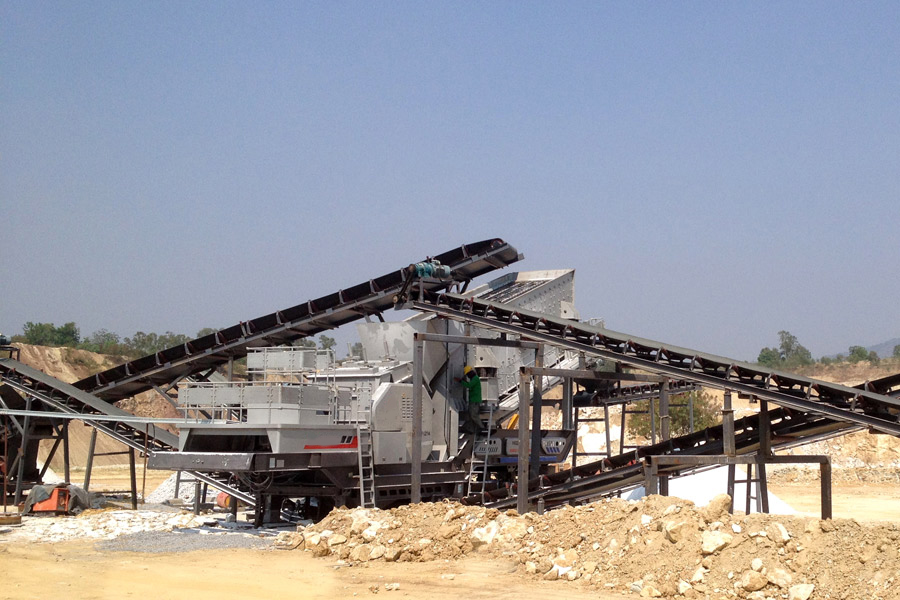
Conclusion
Blending methodsforroadsubbasematerialshave evolvedfroma niche techniquetoa mainstreambestpractice.Theyrepresenttheconvergenceofeconomicviability,.engineeringexcellence,.andenvironmentalstewardship.Asmaterial scienceadvancesanddigitaltoolsbecomemoreprevalent,.theprecisionandefficiencyofblendingwillonlyincrease,.solidifyingitsroleasthefoundationfortheroadsofthefuture