
business plan for quarry pdf
A Comprehensive Guide to Developing a Business Plan for a Quarry Operation
A well-structured business plan is the foundational document for securing financing, obtaining permits, and guiding the successful launch and operation of a quarry. This guide outlines the critical components of a professional quarry business plan, moving from executive summary to financial projections. It serves as a practical framework for entrepreneurs and companies seeking to enter the aggregates industry, addressing market analysis, operational logistics, risk management, and financial viability. The following sections detail the essential elements that investors and regulatory bodies expect to see in a robust plan for extracting and processing stone, sand, or gravel.
Key Components of a Quarry Business Plan
- Executive Summary: A concise overview of the entire plan, highlighting the business opportunity, location, projected market share, capital requirements, and key financial forecasts.
- Company Description: Legal structure (e.g., LLC, Corporation), mission statement, ownership details, and the specific goals of the quarry project.
- Market Analysis: A detailed examination of the local and regional construction industry, infrastructure projects, and competitor landscape. Demand for specific aggregate types (e.g., crushed granite, limestone for asphalt) must be quantified.
- Operations Plan: The core technical section covering:
- Site & Geology: Details of mineral reserves based on geological surveys and drill data.
- Extraction & Processing Method: Description of drilling, blasting (if applicable), crushing, screening, and washing processes.
- Equipment List: From excavators and haul trucks to primary and secondary crushers.
- Environmental & Compliance Strategy: Plans for dust suppression, noise control, water management, site rehabilitation, and adherence to MSHA (Mine Safety and Health Administration) regulations.
- Marketing & Sales Strategy: Target customers (ready-mix plants, road contractors, government entities), pricing model (FOB quarry vs. delivered), and sales channels.
- Management Team: Profiles of key personnel with experience in mining operations management geology finance
- Financial Projections: The most critical section for investors including:
- 3-5 year profit & loss statement
- Cash flow projection
- Balance sheet
- Capital expenditure (CAPEX) budget
- Break-even analysis
Operational Methodologies: A Comparison
The choice between a stationary and a mobile crushing plant is a fundamental operational decision with significant cost implications.
| Feature | Stationary Plant | Mobile / Semi-Mobile Plant |
|---|---|---|
| Setup Cost | High initial CAPEX for foundations/conveyor systems | Lower initial CAPEX; faster deployment |
| Production Capacity | Suited for very high-volume long-term reserves (>15 years) | Ideal for medium-volume or phased extraction |
| Flexibility | Fixed location; limited ability to follow deposits | Can be relocated within or between sites reducing haul distance |
| Suitability | Large-scale quarries with centralized reserves | Smaller deposits greenfield sites or contract crushing |
Real-World Case: Hanson Aggregates' Adoption of Mobile Crushing
Facing a need to access reserves farther from their main processing plant at their Thornton Quarry operation in Illinois USA Hanson Aggregates implemented an in-pit mobile crushing solution By placing a large semi-mobile crusher directly in the extraction zone they significantly reduced truck haul cycles on grade This real-world application led to documented reductions in fuel consumption diesel particulate emissions and overall operating costs while increasing throughput—a solution detailed in industry case studies from equipment manufacturers like Metso.
Frequently Asked Questions (FAQ)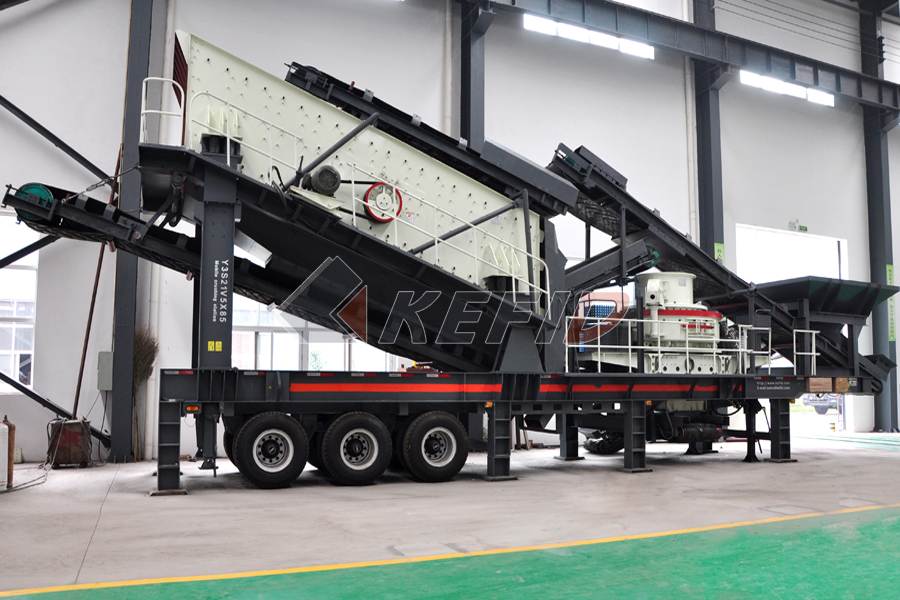
Q1: What are the most critical permits needed for starting a quarry?
The permitting process is extensive typically requiring local zoning approvals state-level mining or environmental permits (e.g., from agencies like California's Division of Mine Reclamation or Texas Commission on Environmental Quality) water rights air quality permits (for dust) federal permits under the Clean Water Act Section 404 if wetlands are involved MSHA safety plans.jpg)
Q2: How is the economic viability of a quarry site determined?
Viability hinges on two professional assessments: A Geological Reserve Report confirming sufficient volume quality overburden ratio based on core sampling; A Market Feasibility Study analyzing transport cost radius competitor pricing projected demand from infrastructure timelines often sourced from state DOT planned projects
Q3: What are realistic startup cost ranges?
Costs vary dramatically by scale region but industry benchmarks suggest startup capital including land acquisition permitting equipment site development working capital can range from $ million USD for small sand gravel operation to well over $ million+ for large hard rock quarry with processing plant
Q4: How are quarries rehabilitated after closure?
Modern quarries operate under legally binding reclamation plans Common end uses include recreational lakes wildlife habitats industrial parks or landfill sites Progressive rehabilitation reclaiming sections during operation is now standard practice as seen with former limestone quarries transformed into public parks such as The Butchart Gardens in British Columbia
Q5: What is the single biggest operational risk?
Beyond market demand fluctuations regulatory compliance failure poses existential risk Violations of environmental permits particularly related to water discharge sediment control can result in severe fines operational shutdowns mandatory costly remediation effectively negating financial projections emphasizing why compliance must be core to operational planning