
crusher and mining equipment usa
Crusher and Mining Equipment in the USA: Powering Domestic Resource Extraction
The United States mining sector is a cornerstone of the national economy, supplying critical minerals, aggregates, and coal for infrastructure, energy, and manufacturing. At the heart of this industry are robust crushers and specialized mining equipment, engineered to meet the scale and rigor of American operations. From the iron ranges of Minnesota to the copper pits of Arizona and the aggregate quarries nationwide, this equipment forms an integrated ecosystem for extracting, reducing, and processing raw materials. This article provides an overview of key equipment categories, their applications, and the trends shaping this vital industrial landscape.
Core Equipment Categories and Applications
Crushers are fundamental for size reduction. The choice depends on material hardness, abrasiveness, required product size, and capacity.
- Jaw Crushers: Primary crushers ideal for hard, abrasive materials like granite and basalt. They use a compressive force via a fixed and a movable jaw.
- Gyratory Crushers: High-capacity primary crushers for large-scale hard rock mining (e.g., copper, iron ore). Superior to jaw crushers at handling slabby material.
- Cone Crushers: Secondary/tertiary crushers for further reduction of hard, abrasive ores. Produce more uniform, finer product than jaw crushers.
- Impact Crushers (Horizontal & Vertical Shaft): Best for softer, less abrasive materials like limestone or recycled concrete. Use high-speed impact for a cubical product shape.
- Sizers & Roll Crushers: For coal, salt, and softer ores. Use low-speed, high-torque compression between rotating rolls or shafts.
Supporting mining equipment includes: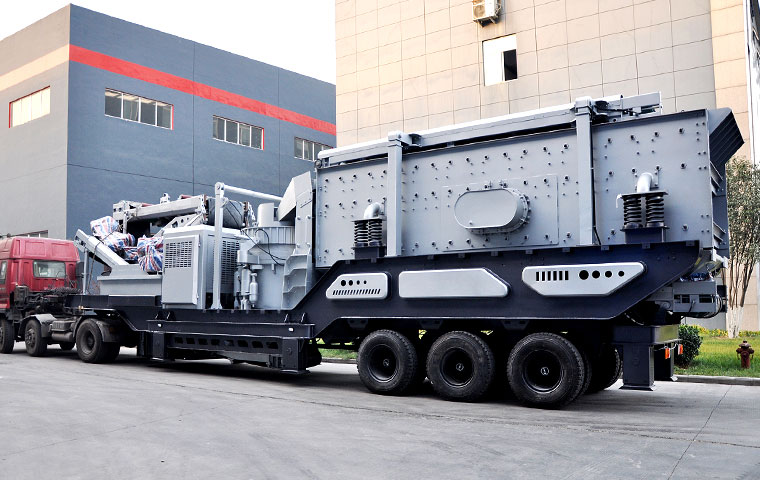
- Drills: Rotary blasthole drills (for large open pits) and top hammer/DDH drills (for development).
- Haul Trucks: Ultra-class mechanical drive and electric drive trucks (e.g., Caterpillar 797F, Komatsu 930E) with capacities exceeding 300 tons.
- Wheel Loaders & Dozers: For material handling and site maintenance.
- Conveying Systems: Overland and in-pit conveyors that offer an energy-efficient alternative to truck haulage.
Key Considerations: Stationary vs. Mobile/Fleet
A major strategic decision involves choosing between stationary plants and mobile/track-mounted fleets.
| Feature | Stationary Crushing/Screening Plant | Mobile/Track-Mounted Crusher |
|---|---|---|
| Primary Use | Long-life mines & large quarries with fixed infrastructure. High-volume, dedicated processing points. | Contract crushing, multi-site operations, smaller quarries. Sites with limited lifespan or need relocation. |
| Setup Time/Cost | High initial capital cost; permanent foundation required; longer setup time. | Lower initial capital; minimal site prep; can be operational in hours/days. |
| Flexibility | Low. Fixed location; material must be hauled to plant. | High. Can be moved between faces or sites; follows the material source. |
| Output Capacity | Typically very high (thousands of TPH). Designed for maximum throughput over decades. | Generally low to medium (up to ~600 TPH). Scalable by adding units. |
| Operational Cost | Lower per-ton cost at high volumes over long term due to efficiency & integration. | Higher fuel/maintenance per ton but offset by flexibility & reduced haul costs on-site. |
Industry Trends & Technological Integration
The U.S. market is driven by:.jpg)
- Automation & Remote Control: Autonomous haulage systems (AHS) are deployed in mines like Roy Hill in Australia (using Komatsu/Caterpillar tech proven relevant to US operations). Remote operation centers allow control of drilling/blasting from miles away.
- Digitalization & IoT: Telematics on equipment (e.g., Cat® MineStar™, Komatsu Frontrunner) enable predictive maintenance, real-time health monitoring, and fleet optimization.
- Sustainability Focus: Electrification of equipment (e.g., battery-electric LHDs in underground mines) to reduce diesel particulate and GHG emissions is gaining traction.
- Domestic Critical Minerals Push: Equipment is being adapted for new lithium brine extraction projects or rare earth element processing circuits.
Real-World Application: Granite Quarry Modernization
A large granite quarry in Texas faced rising costs due to an aging stationary plant located far from new excavation faces.
- Challenge: High cycle times for haul trucks feeding the primary crusher increased fuel and labor costs.
- Solution: Implementation of a semi-mobile primary crushing station. A massive gyratory crusher was placed on a movable pedestal within the pit.
- Implementation & Result: The semi-mobile crusher is relocated every 12-18 months via crawler transporters as the pit advances.Trucks now have drastically reduced haul cycles.The system uses IPCC (In-Pit Crushing and Conveying) technology,material from the semi-mobile crusher is conveyed directly to the stationary secondary plant.This reduced overall truck fleet requirements by 40%,cut diesel consumption significantly,and lowered per-ton operating costs by an estimated 22%,demonstrating how hybrid fixed-mobile solutions optimize large-scale operations.
FAQ
1.What are the leading U.S.-based manufacturers of mining crushing equipment?
Major players include Caterpillar Inc.(which owns legacy brands like Bucyrus),Terex Corporation(Terex MPS),Eagle Crusher,and McLanahan Corporation.Komatsu America(Japanese parent) also has a massive manufacturingand R&D presence stateside.Many European firms(like Sandvikand Metso Outotec) also have significant manufacturing facilitiesin the U.S.to servethe local market.
2.How does regulation(like MSHA)impact equipment designin U.S.mining?
The Mine Safetyand Health Administration(MSHA)enforces stringent regulations that directly influence design.Equipmentfor underground coal mines mustbe MSHA-approvedas"permissible"(explosion-proof).Surfaceand metal/non-metal mineequipmentmustmeetguarding,safetylockout,dust suppression,and noise control standards.Designs often includespecific featureslike proximity detection systemsfor haul trucksto meetthese mandatory rules.
3.Is used mining equipmenta viable optionin the U.S.market?
Yes,the secondary marketis robust.Re-manufacturedor well-maintainedused equipmentfrom major OEMsoften providesa lower-cost entry point.Manufacturer-certified rebuild programs(e.g.,Cat Certified Rebuild)offer machineswith warrantyat a fractionof newcost.Critical factorsare componentlife history(METRICSfrom telematics),compatibilitywith currenttechnology/parts,and ensuringthe machine meetslatestMSHA safetyupdates before deployment.
4.What'sthe roleof aggregatecrushersin U.S.infrastructureprojects?
Aggregate(sandgravelcrushedstone)is essentialfor concrete asphaltand roadbase.The Infrastructure Investmentand Jobs Acthas drivendemand.Portabletrack-mountedcrushingandscreening plantsare crucialas theycan bedeployeddirectlyat infrastructureproject sites(e.g.,highway expansion)toprocessmaterialon-site reducinghaulingcostsand enablingrecyclingof existingconcrete/asphaltfrom oldroadwaysinto newaggregateforthe project(closingthe looponsite).
*Sources& References:This overview synthesizes informationfrom publicly available technical literaturefrom Caterpillar,Komatsu Metso Outotec,and Sandvik;industry reportsfromthe U.S.Geological Survey(USGS)and National Mining Association(NMA);andspecific case studydetailspublishedinthe trade journal"Engineering& Mining Journal(E&MJ)"regardingIPCC applications.