
crusher principle of operation
Industry Background: The Unseen Engine of Modern Infrastructure
From the aggregates forming the foundation of our roads and buildings to the minerals essential for electronics and manufacturing, size reduction is a fundamental process in countless industries. The core technology enabling this is the industrial crusher. The industry's primary challenge lies in optimizing the comminution (size reduction) process, which is notoriously energy-intensive. According to a study by the Coalition for Eco-Efficient Comminution, comminution can account for over 50% of a mine's total energy consumption and up to 3% of global electrical power. Beyond energy, operational challenges include managing wear and maintenance costs, handling varying feed materials with different hardness and abrasiveness, meeting stringent product size specifications, and minimizing environmental impact through dust and noise emissions.
What is the fundamental principle behind a crusher's operation?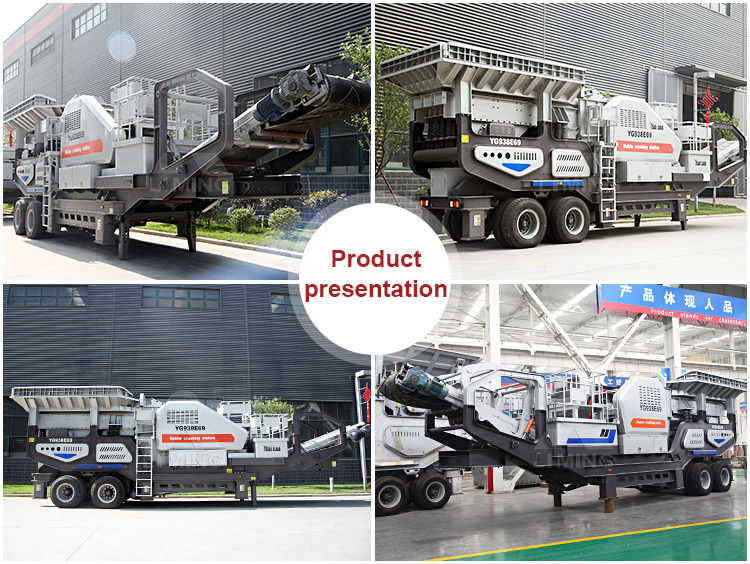
At its core, every crusher operates on the principle of applying mechanical force to a material to overcome its internal cohesive forces, thereby breaking it into smaller pieces. This force can be applied through several primary mechanisms:
- Compression: Material is squeezed between two rigid surfaces. This is the dominant mechanism in jaw crushers, gyratory crushers, and cone crushers. It is most effective on hard and abrasive materials.
- Impact: Material is struck by hammers or blow bars that rotate at high speed, or it is thrown against a stationary anvil. This method, used in Horizontal Shaft Impactors (HSI) and Vertical Shaft Impactors (VSI), is excellent for softer, less abrasive materials and for producing a well-shaped, cubicle product.
- Attrition: Material is ground down by a scrubbing action between two surfaces. This is a secondary mechanism in many crushers but is the primary action in some finer grinding equipment.
- Shear: A combination of compression and cutting action, typically employed in smooth- or toothed-roll crushers for smaller reduction ratios.
The choice of crushing principle directly impacts efficiency, product shape, particle size distribution, and wear part consumption.
Core Product/Technology: A Deep Dive into Crusher Architecture
While there are numerous crusher types tailored for specific tasks—from primary jaw crushers that accept boulder-sized feed to tertiary cone crushers producing fine sand—their architectures are all engineered around their core operating principle.
Jaw Crusher:
- Architecture: Comprises a fixed vertical "jaw" and a reciprocating moving jaw. The space between them narrows as material travels downward.
- Innovation: Modern designs feature hydraulic adjustment systems for quick setting changes (CSS - Closed Side Setting) and hydraulic toggle release mechanisms to protect the crusher from tramp metal (uncrushable material).
Gyratory Crusher:
- Architecture: Features a long spindle with a crushing head that gyrates within a concave mantle. It's typically larger than a jaw crusher and used for high-capacity primary crushing.
- Innovation: Advanced models incorporate automated control systems that continuously monitor power draw and hydraulic pressure to optimize throughput and liner life.
Cone Crusher:
- Architecture: Similar in concept to a gyratory but with a shorter spindle supported by a curved universal bearing beneath the head. It's predominantly used for secondary and tertiary crushing stages.
- Innovation: Key innovations include hydro-pneumatic tramp release systems and chamber optimization designs that allow operators to alter the crushing cavity profile without changing parts manually.
Horizontal Shaft Impactor (HSI):
- Architecture: Consists of a horizontal rotor assembly with fixed or pivoting hammers (blow bars). The rotor spins at high speed, impacting incoming feed against breaker aprons.
- Innovation: Innovations focus on rotor design (solid vs. modular) for durability and ease of maintenance, as well as adjustable primary and secondary aprons to fine-tune product size.
| Feature | Compression Crusher (e.g., Jaw/Cone) | Impact Crusher (e.g., HSI) |
|---|---|---|
| Best For | Hard, abrasive materials (e.g., granite, basalt) | Soft to medium-hard, non-abrasive materials (e.g., limestone, recycled concrete) |
| Product Shape | More flaky & elongated | More cubicle & well-shaped |
| Wear Cost | Generally lower per ton on abrasive rock | Can be higher due to high-speed impact |
| Fines Production | Lower percentage | Higher percentage |
| Energy Efficiency | More efficient on hard rock | More efficient on soft rock |
The overarching technological trend across all types is the integration of automation and digitalization. Smart sensors monitor parameters like pressure, temperature, power draw, and vibration. This data feeds into sophisticated control systems like Metso's Metrics or Sandvik's My Fleet portals, enabling real-time performance monitoring predictive maintenance.
Market & Applications: Where Crushing Principles Meet Reality
The application of crushing technology spans numerous sectors:
- Mining & Quarrying: The largest market segment. Crushers are used from primary blasting-run-of-mine ore down to finely crushed rock for mineral processing.
- Benefits: High throughput reliability enables continuous operation; optimized liner designs reduce downtime for changes.
- Construction & Demolition Recycling: Crucial for sustainable development. Impact crushers are often preferred here due to their ability to handle variable feed (concrete with rebar) produce high-quality aggregate from waste.
- Benefits: Reduces landfill use creates valuable secondary raw materials; magnetic separators can be integrated to remove ferrous metal.
- Aggregate Production: Produces sand gravel crushed stone for concrete asphalt road base.
- Benefits: Precise control over product gradation ensures compliance with construction specifications; cubical product from impact crushers improves strength in asphalt concrete mixes.
- Industrial Minerals Processing: Used in industries producing cement lime phosphate potash coal.
The measurable benefits across these applications include reduced cost per ton processed increased plant availability improved final product quality leading higher market value compliance with environmental regulations through dust suppression noise control systems.
Future Outlook: Smarter Greener Crushing
The future of crushing technology will be shaped by three key trends:
- Digitalization Intelligence: The proliferation of Industrial Internet Things IIoT will lead fully autonomous crushing plants AI-powered process optimization systems will adjust parameters real-time based feed composition wear levels maximizing throughput efficiency predictive maintenance will become standard preventing unplanned stoppages extending equipment life
- Sustainability Energy Efficiency: As energy costs rise environmental regulations tighten development ultra-efficient drives hybrid power systems will accelerate research into alternative comminution technologies high-pressure grinding rolls HPGR continues gain traction offering significant energy savings certain applications
- Modularity Mobility: Demand quickly deployable easily relocatable plants growing particularly mining contracting sectors modular crushing screening plants offer flexibility rapid setup minimal civil works
These advancements point towards future where crushing operations are not only more productive but also more sustainable connected data-driven.jpg)
FAQ Section
Q1: What factors determine whether I should use an impact or compression-type crusher?
A1: The choice primarily depends on material characteristics application requirements Use compression crushers Jaw Cone hard abrasive materials like granite basalt when wear cost major concern Use impact crushers HSI softer less abrasive materials like limestone when producing well-shaped aggregate key priority
Q2: How does Closed Side Setting CSS affect my operation?
A2: CSS smallest distance between mantle concave cone crusher moving fixed jaw plates jaw crusher It single most important parameter controlling product size output capacity Smaller CSS produces finer product but reduces throughput increases power draw risk packing Larger CSS increases capacity produces coarser product Regular accurate CSS adjustment critical consistent performance
Q3: What role does automation play in modern crushing plants?
A3: Modern automation systems perform several critical functions They ensure consistent choke-fed condition optimal efficiency monitor key parameters power pressure temperature protect equipment catastrophic damage provide real-time data performance tracking enable remote monitoring control reducing need onsite personnel facilitate precise setting adjustments maintain product specification
Q4: How can I manage wear costs effectively?
A4: Effective wear cost management involves multiple strategies Select correct liner material manganese steel chrome iron ceramic composite match your specific material abrasiveness Ensure correct operating parameters like CSS feed rate avoid improper stress Monitor liner wear regularly using laser scanning profiling tools Plan liner changes during scheduled maintenance windows avoid unplanned downtime
Q5: Are there solutions available specifically designed recycling applications?
A5: Yes many manufacturers offer specialized configurations recycling These often include robust designs handle tramp metal reinforced rotors impactors hydraulic adjustment systems clear blockages quickly onboard magnetic separators remove rebar other ferrous contaminants advanced dust suppression systems manage silica dust generated from concrete asphalt
Case Study / Engineering Example
Implementation Of A Tertiary Cone Crusher With Advanced Automation In A Granite Quarry
Background A large granite quarry located Southeastern United States was experiencing challenges its tertiary crushing stage Existing older cone crushers were struggling maintain consistent product gradation required high-value asphalt chips concrete sand Furthermore frequent unplanned downtime due mechanical failures rising maintenance costs were impacting profitability plant aimed increase production -10mm chips by 15% while reducing operating costs improving product consistency
Solution After detailed analysis plant management decided install modern CH540 cone crusher equipped advanced ASRi automated control system Key features implementation included
Crusher designed optimized cavity geometry choke-fed operation ensuring efficient inter-particle breakage
ASRi system continuously monitored adjusted CSS real-time based on power draw maintaining optimal performance despite variations feed
Dust sealing system extended bearing liner life harsh abrasive environment
Installation completed during planned 72-hour shutdown minimal disruption ongoing operations
Measurable Outcomes Performance data was collected over six-month period compared previous year figures
Throughput production -10mm fraction increased 18% exceeding initial target due improved efficiency consistent choke-feed
Product Consistency Product gradation variability reduced by over 40% ensuring superior quality control meeting tightest customer specifications asphalt production
Operating Costs Maintenance costs reduced estimated 22% due reduced liner wear fewer mechanical issues predictive alerts from ASRi system allowing planned interventions
Energy Efficiency Specific energy consumption kWh/ton dropped approximately 8% result optimized operating parameters efficient drive system
Conclusion strategic investment modern cone technology coupled intelligent automation delivered significant operational financial benefits demonstrating direct impact advanced crushing principles bottom-line results highly competitive aggregate industry