
flow chart of 500th stone crushing plant
Flow Chart of a 500 T/H Stone Crushing Plant: Process, Design, and Case Study
This article provides a detailed overview of the standard flow chart and key components for a medium-to-large-scale 500 tonnes per hour (T/H) stone crushing plant. We will break down the typical production stages from raw material feeding to final product stocking, discuss critical design considerations with comparative analysis, address common questions, and examine a real-world application to illustrate practical implementation.
1. Standard Process Flow Chart and Description
A 500 T/H aggregate plant is designed for high-volume production, requiring robust equipment and precise material flow coordination. The standard process follows a multi-stage crushing and screening circuit.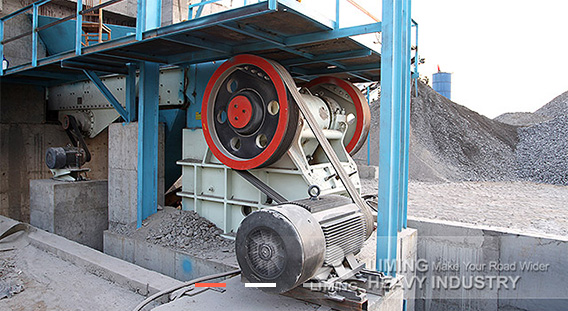
- Stage 1: Primary Crushing. Large raw feed (0-800mm) from the quarry is delivered by dump trucks into a primary hopper, typically equipped with a vibrating grizzly feeder (VGF). The VGF removes natural fines ("scalpings") and evenly feeds material to a large jaw crusher or gyratory crusher. Here, it is reduced to a size of approximately 0-250mm.
- Stage 2: Secondary Crushing. The primary crushed material is conveyed to a secondary crushing circuit. This usually involves one or two cone crushers configured for intermediate reduction. The output size after this stage is typically 0-60mm.
- Stage 3: Screening & Tertiary Crushing. The material from the secondary crusher is sent to a multi-deck vibrating screen (e.g., 3 or 4 decks). Oversize material from the top decks is routed to tertiary cone crushers in a closed circuit for further size reduction. Correctly sized mid-range aggregates are diverted as finished products.
- Stage 4: Final Screening and Stockpiling. Material passing through the lower screen decks is conveyed to additional screens for precise classification into final product sizes (e.g., 0-5mm sand, 5-10mm, 10-20mm, 20-31.5mm). Each product is then transported via stacker conveyors to designated stockpiles.
A simplified flow chart can be represented as:
Raw Feed → VGF & Jaw Crusher (Primary) → Cone Crusher(s) (Secondary) → Vibrating Screens → [Oversize to Tertiary Cone Crusher(s)] → Final Screening → Product Stockpiles
2. Key Design Considerations and Equipment Selection
Designing such a plant involves balancing capacity, product gradation, and operational cost. Two common configurations are compared below:
| Design Aspect | Two-Stage Crushing Circuit | Three-Stage Crushing Circuit |
|---|---|---|
| Typical Flow | Primary Jaw + Secondary Cone + Screening | Primary Jaw + Secondary Cone + Tertiary Cone(s) + Multi-stage Screening |
| Max Feed Size | Smaller (e.g., ≤500mm) | Larger (e.g., ≤800mm) |
| Product Shape Control | Good | Excellent (Cubical) |
| Overall Complexity | Lower; fewer conveyors & transfer points | Higher; more equipment & chutes |
| Suitability for 500 T/H | Suitable for softer rock or less strict shape requirements. May struggle with hard abrasive rock at full spec. | Preferred for hard rock (granite, basalt) and strict product shape/size specifications. Offers better flexibility. |
For a reliable 500 T/H plant processing hard granite, the three-stage circuit is almost standard. Equipment selection leans towards heavy-duty models:
- Primary Crusher: Single-toggle jaw crusher (e.g., feed opening ~1200x1500mm).
- Secondary Crusher: One large or two medium multi-cylinder hydraulic cone crushers.
- Tertiary Crushers: Two or more fine-cone crushers operating in closed circuit with screens.
- Screens: Multiple large-sized linear or circular motion vibrating screens with high screening efficiency.
3. Real-World Case Study: Granite Aggregate Plant in Southeast Asia
A project in Malaysia required producing high-quality aggregates for concrete and asphalt from local granite, with a capacity of over 480 T/H.
- Challenge: The abrasive granite required high wear resistance and precise control over final product gradation for commercial sale.
- Solution: A three-stage crushing and screening plant was installed.
- A C125 jaw crusher handled primary crushing.
- Two HP400 cone crushers formed the secondary stage.
- Two HP300 cone crushers were used in the tertiary stage, operating in closed circuit with four triple-deck vibrating screens.
- A sand washing system was integrated to process the fine material (0-5mm) into high-value manufactured sand.
- Outcome: The plant consistently outputs over 500 T/H of well-shaped aggregates in five specified sizes. The closed-circuit tertiary stage allows real-time adjustment of crusher settings to meet changing market demands.
4.Frequently Asked Questions (FAQ).jpg)
Q1: What are the major factors determining whether a two-stage or three-stage flow is needed?
The decision hinges on rock abrasiveness/hardness (Bond Work Index), required final product shape, maximum feed size from the quarry blast, and desired flexibility in product mix. Hard/abrasive rock like granite/andesite almost always necessitates three stages for sustainable output at this capacity.
Q2: Is dust control critical in a 500 T/H plant?
Absolutely. At this scale, dust emission points are significant—at feeders, crushers, screens, and transfer points—making it an environmental compliance priority according to standards like EPA regulations or EU directives on industrial emissions . A comprehensive system including water spray nozzles at strategic points and baghouse filter enclosures around major sources is standard practice.
Q3: How much electrical power does such a plant typically require?
Total installed motor power can range from approximately - kilowatts depending on configuration . For example primary jaw ~160kW secondary cones ~2x250kW tertiary cones ~2x200kW plus screens conveyors feeders etc Power demand per tonne produced varies but efficient modern plants aim for - kWh/tonne
*Disclaimer: This article describes generalized industry-standard processes based on publicly available engineering handbooks equipment manufacturer application guides published case studies from firms like Metso Sandvik etc Specific designs must be developed by qualified engineers following site-specific geotechnical data