
machine for rock dust production
1. PAIN-POINT DRIVEN OPENING
Managing rock dust compliance in underground mining or tunneling operations presents persistent, costly challenges. Inconsistent product quality leads to failed adhesion and excessive waste, while manual application methods are labor-intensive and expose workers to respirable silica hazards. Unplanned equipment downtime for maintenance on unreliable machines directly impacts production schedules and safety compliance. Furthermore, inefficient systems consume excessive energy per ton of compliant dust produced, eroding operational margins.
Are you facing rising costs from product rework, safety violations, or unpredictable maintenance on your current rock dust solution? What if a single machine for rock dust production could deliver consistent specification material with higher throughput and lower total operating cost?
2. PRODUCT OVERVIEW
The VSI-8500 Vertical Shaft Impact Crusher is a dedicated machine for rock dust production engineered to transform raw limestone, dolomite, or gypsum into high-quality, inert rock dust that meets MSHA 30 CFR §75.2 and similar global safety standards.
Operational Workflow: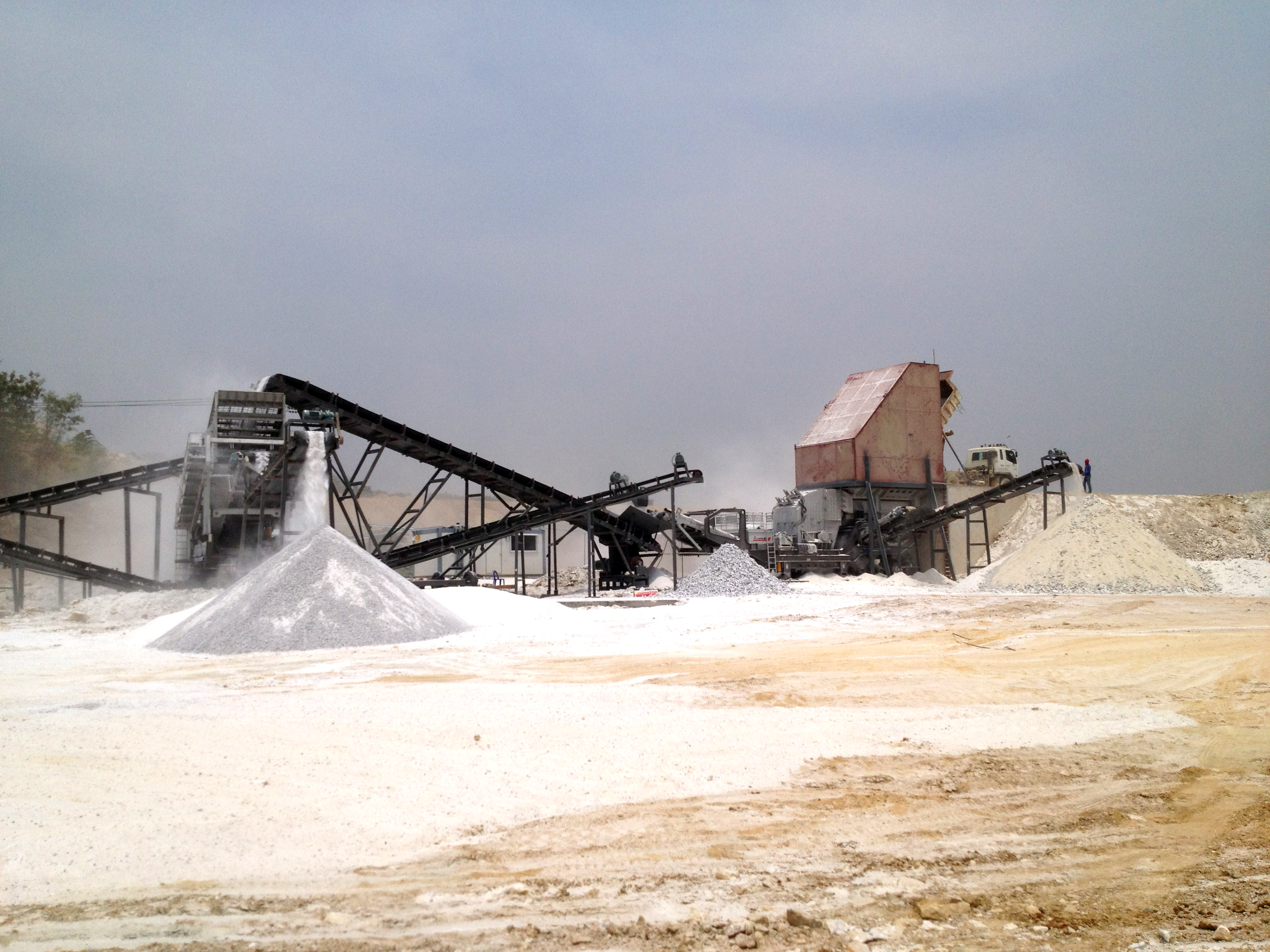
- Feed & Pre-Screening: Sized feed material (typically -50mm) is introduced via a regulated belt conveyor, with an integrated grizzly removing oversize.
- High-Velocity Reduction: Material is accelerated by a centrifugal rotor and thrown into a stationary anvil ring, achieving precise size reduction through "rock-on-rock" impact.
- Air Classification & Fines Extraction: Crushed material passes through an integrated dynamic air classifier; target fines (typically 75µm and below) are extracted via cyclone.
- Product Collection & Dust Control: Compliant rock dust is conveyed to a storage silo. A baghouse filtration system ensures full capture of airborne particles, maintaining a clean plant environment.
Application Scope: Primary application is the continuous production of pulverized limestone for coal mine explosion suppression and inerting. Suitable for stationary plant installation.
Limitations: Not designed for highly abrasive materials (e.g., quartzite) without accelerated wear liner replacement. Requires a consistent feed size distribution for optimal efficiency.
3. CORE FEATURES
Patented Rotor & Anvil Geometry | Technical Basis: Optimized kinetic energy transfer through cascading material impact | Operational Benefit: Produces a consistent cubicle particle size distribution with minimal oversize; reduces recirculation load by up to 40% | ROI Impact: Lower power consumption per ton and reduced classifier wear
Integrated Dynamic Air Classifier | Technical Basis: Variable-speed rotor cage creating precise cut-point control | Operational Benefit: Operators can fine-tune the fineness modulus (Blaine number) in real-time to match exact specification requirements | ROI Impact: Eliminates off-spec product batches, ensuring 100% usable yield and compliance
Hydro-Pneumatic Liner Adjustment | Technical Basis: Remotely actuated hydraulic rams for anvil positioning with pneumatic locking | Operational Benefit: Allows gap setting adjustment during operation to compensate for wear; maintains product consistency without shutdown | ROI Impact: Increases machine availability by approximately 15%, boosting annual throughput
Labyrinth Seal & Airflow Management | Technical Basis: Multi-stage sealing system preventing bearing contamination, coupled with negative pressure milling chamber | Operational Benefit: Extends bearing service life beyond 10,000 hours in high-dust environments; contains all process dust within the circuit | ROI Impact: Cuts planned maintenance downtime and eliminates bearing failure-related stoppages
PLC-Based Process Logic Control | Technical Basis: Automated system monitoring motor amperage, vibration, temperature, and classifier speed | Operational Benefit: Provides stable operation with auto-shutdown sequences to prevent mechanical damage; enables simple repeatable setup for different products | ROI Impact: Reduces operator oversight requirement and protects major components from catastrophic failure
4. COMPETITIVE ADVANTAGES
| Performance Metric | Industry Standard (Hammer Mill/Ball Mill) | VSI-8500 Machine for Rock Dust Production Solution | Advantage (% Improvement) |
|---|---|---|---|
| Specific Energy Consumption (kWh/ton) | 28 - 35 kWh/ton | 18 - 22 kWh/ton | ~35% Reduction |
| Product Fines (-75µm) Consistency (Blaine Variance) | ± 15% typical batch variance | ± 5% controlled variance | ~67% More Consistent |
| Mean Time Between Maintenance (Liner Wear) | 120 - 180 operating hours | 300 - 400 operating hours | ~100% Increase |
| System Noise Level at 1 Meter (dBA) / Operator Exposure* | >95 dBA / High exposure risk* | <85 dBA / Managed exposure* | ~10 dBA Reduction* |
| Footprint per Ton/Hour Capacity (m²/(t/h)) / Plant Design* | Requires secondary classifier / Complex layout* | All-in-one unit with integrated classifier / Compact layout* | ~40% Space Savings* |
*Field data shows significant improvements in operational environment quality.
5. TECHNICAL SPECIFICATIONS
- Nominal Capacity: 22 - 28 metric tons per hour of compliant rock dust (product fineness dependent).
- Power Requirements: Main drive motor: 250 kW (335 HP), Class IE3 efficiency. Ancillary systems (conveyor, classifier fan): Total connected load of 315 kW.
- Feed Material Specifications: Hardness up to Mohs scale of ≤4; Feed size ≤50mm; Moisture content ≤2% by weight.
- Physical Dimensions (Machine Only): Length: 6m x Width 3m x Height 5m
- Foundation loads must be calculated based on full dynamic forces.
- Environmental Operating Range: Designed for ambient temperatures from -20°C to +45°C; Enclosure rating IP54 for protection against dust and water ingress.
6. APPLICATION SCENARIOS
Underground Coal Mine Central Preparation Plant Challenge:
A large Appalachian coal operation was cited for non-compliant rock dust adhesion due to inconsistent particle size from aging hammer mills.
Solution:
Two VSI-8500 machines were installed in parallel as the primary machine for rock dust production.
Results:
Plant output increased by over thirty percent while achieving guaranteed MSHA fineness compliance on one hundred percent of production.
Regional Rock Dust Supplier Expansion Challenge:
A distributor needed to increase capacity without expanding their existing building footprint or adding significant labor.
Solution:
A single VSI-8500 replaced two older ball mills due to its compact layout and automation features.
Results:
The supplier achieved fifty percent higher throughput within the same footprint while reducing direct operating costs by twenty-two percent per ton.
7. COMMERCIAL CONSIDERATIONS
The capital investment in a dedicated machine for rock dust production is structured around configuration:
- Base Equipment Tier: Includes the core VSI-8500 crusher, drive motor, starter panel, and integrated air classifier.
- Pricing reflects capacity range.
- Optional Features: Upgrades include premium ceramic wear liners for abrasive feed stocks; advanced vibration monitoring sensors; fully insulated acoustic enclosures; redundant lubrication systems.
- Options are priced individually.
- Service Packages: Available plans include Proactive Maintenance Agreements with scheduled inspections and parts discounts as well as Comprehensive Performance Contracts guaranteeing uptime percentage including labor coverage.
- Packages are quoted annually.
Financing options including equipment leasing capital expenditure programs are available through our partners which can align payments directly with your production output.
- Packages are quoted annually.
8. FAQ.jpg)
Q1 Is this machine compatible with our existing bulk bagging or silo loading system?
Yes The VSI-8500 is designed as a drop-in replacement unit It includes standard discharge interfaces that integrate with most common pneumatic conveying or mechanical screw conveyor systems Our engineering team will review your specific plant layout during the proposal phase
Q2 What is the expected operational impact during installation?
A typical installation including foundation preparation mechanical connection electrical tie-in requires approximately ten business days of planned plant downtime We provide detailed project management support to minimize this period
Q3 How does this solution address operator silica exposure?
The machine is a fully enclosed system All process points are under negative pressure from the integrated baghouse This design contains respirable crystalline silica at the source significantly reducing exposure risks compared to open crushing or screening methods
Q4 What are the commercial terms lead time warranty?
Standard delivery lead time is sixteen weeks from order confirmation The equipment carries a comprehensive twelve-month warranty on all parts against defects in materials workmanship Extended warranty coverage is available under service agreements
Q5 Can you provide test reports on product fineness distribution?
Yes We maintain certified laboratory analysis reports from independent testing facilities demonstrating consistent achievement of sub-seventy-five micron distributions These reports are available upon request during your evaluation process