
magnetite seperation of titanium ore
Magnetite Separation of Titanium Ore: An Overview
The separation of magnetite from titanium-bearing ores is a critical mineral processing step, primarily employed in the beneficiation of titanomagnetite and ilmenite deposits. These ores are complex sources of both iron and titanium, and their economic viability hinges on the effective separation of the valuable minerals. Magnetic separation, leveraging the natural ferromagnetism of magnetite, serves as a core, efficient, and often low-cost method to achieve an initial concentration. This process typically precedes more refined techniques for isolating titanium minerals like ilmenite or rutile. The following article details the principles, process flows, technological comparisons, and real-world applications of magnetite separation in titanium ore processing.
Principles and Process Flow
Titanomagnetite is a solid solution series between magnetite (Fe₃O₄) and ulvöspinel (Fe₂TiO₄). Ilmenite (FeTiO₃) itself is weakly magnetic. In primary ore bodies, these minerals are often intergrown. The magnetic separation process exploits the significant difference in magnetic susceptibility between strongly magnetic magnetite/titanomagnetite and weakly paramagnetic or non-magnetic gangue minerals and even ilmenite at certain intensities.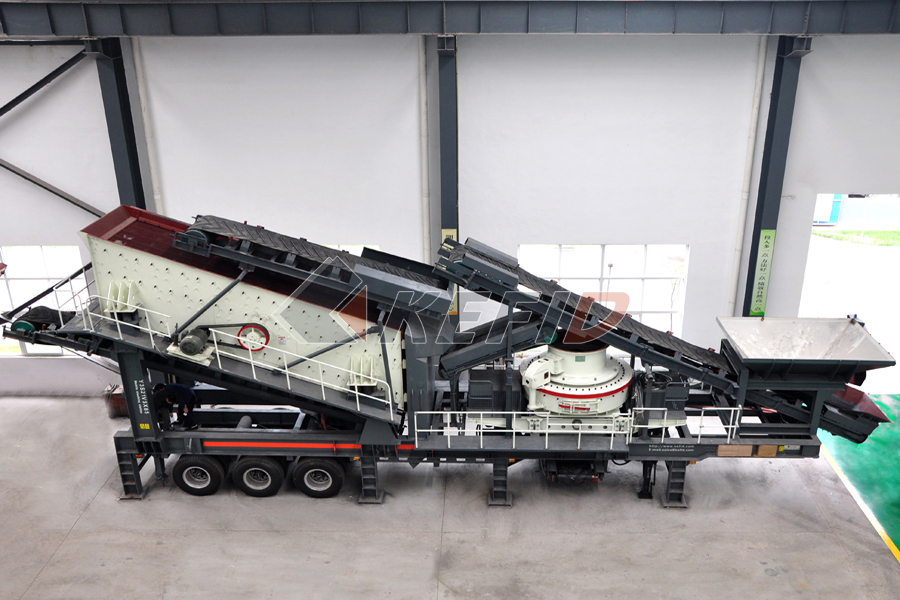
A standard beneficiation circuit involves:
- Crushing & Grinding: The ore is reduced in size to liberate the magnetite grains from the titanium-bearing minerals and silicate gangue.
- Primary Magnetic Separation (Low-Intensity): The ground ore slurry is passed through a low-intensity magnetic separator (LIMS), typically a drum separator with a field intensity of 0.1-0.3 Tesla. This stage recovers the bulk of the strongly magnetic magnetite/titanomagnetite concentrate, which can be used as iron ore feed.
- Tailings Processing: The non-magnetic or weakly magnetic tailings from the LIMS stage contain the bulk of the titanium values (ilmenite) along with other gangue.
- Secondary Concentration: These tailings undergo further processing to recover titanium concentrate. This may involve gravity separation (spirals, cones), high-intensity magnetic separation (HIMS for ilmenite), and electrostatic separation.
Comparison of Magnetic Separation Technologies.jpg)
The choice of magnetic separator depends on the target mineral's properties and its role in the circuit.
| Feature | Low-Intensity Magnetic Separator (LIMS) | High-Intensity Magnetic Separator (HIMS) | Wet vs. Dry Separation |
|---|---|---|---|
| Target Mineral | Strongly magnetic: Magnetite, Titanomagnetite | Weakly paramagnetic: Ilmenite, Hematite, Garnet | - |
| Field Strength | Low (0.1 - 0.3 T) | High (0.5 - 2.0 T or higher) | - |
| Typical Stage | Primary Fe recovery from bulk ore | Secondary Ti recovery from LIMS tailings | - |
| Advantages | High capacity, simple operation, low cost per ton. Effective for primary Fe pull-out. | Can separate weakly magnetic minerals; crucial for Ti concentrate grade improvement. | Wet: Better for fine particles, dust-free, often higher efficiency. Dry: No dewatering needed, suitable for arid regions or coarse feeds. |
| Disadvantages | Only effective on strongly magnetic fractions; cannot recover ilmenite directly from raw ore in most cases without prior reduction roasting to convert ilmenite to magnetitic forms ("artificial magnetite"). Requires water handling and dewatering circuits. Susceptible to clogging in dry processes if material is damp. |
Higher capital and operating costs; more complex operation. Lower throughput compared to LIMS. |
Real-World Application: The Panzhihua Titanomagnetite Deposit, China
The Panzhihua-Xichang region in Sichuan Province hosts one of the world's largest titanomagnetite deposits. The ore contains approximately 30-35% Fe and 10-12% TiO₂.
- Process: The standard flow sheet is a classic example of sequential magnetic separation.
- Run-of-mine ore is crushed and ground.
- A series of Low-Intensity Magnetic Separators (LIMS) recover a high-grade iron concentrate (~55% Fe). This is smelted for steel production.
- The LIMS tailings—now enriched in titanium—are further processed through gravity concentration using spirals to produce a rough ilmenite concentrate.
- This rough concentrate undergoes cleaning via High-Intensity Magnetic Separation (HIMS) and electrostatic separation to produce a final saleable ilmenite concentrate containing over 47% TiO₂.
- Significance: This integrated process allows for the co-production of two vital commodities from a single ore body. The efficient primary removal of magnetitic iron via LIMS is fundamental to making subsequent titanium recovery both technically feasible and economically viable.
Frequently Asked Questions (FAQ)
Q1: Can you recover pure titanium metal directly through this magnetic separation?
No, absolutely not.Magnetic separation is a physical beneficiation process that separates mineral grains based on their magnetic properties.It produces mineral concentrates—in this case,a magnetitic iron concentrate anda separateilmenitetitaniummineralconcentrate.To produce titanium metal,theilmeniterutileconcentrate must undergo complex chemical processing,the Kroll process(involving chlorination andreduction with magnesium),whichis entirely separatefromthe initial physicalseparationstages.
Q2: Why isn'tilmeniteseparated directly by magnets if it contains iron?
Whileilmenit(FeTiO₃)containsironin its structure,theironis locked withina crystal lattice that gives themineralonly weakparamagneticpropertiesatroom temperature.At standardlow-intensitymagneticfieldsusedfor magnetitetheforce exerted onilmenitistooweakfor effective capture.High-intensityseparatorsare requiredto pull theseweaklymagneticgrains.To enhance recovery,sometechnologiesuse"reduction roasting"to convert theironinito stronglymagneticmagnetiteprior tomagneticsorting.
Q3: What are themain challenges inmagneticseparationof titaniferous ores?
Key challenges include:
- Fine Intergrowth: Incomplete liberation during grinding can leave composite particlesofmagnetitandilmente,makingcleanseparationimpossibleand reducingrecoveryandgrade.
- Variable Ore Composition: Changesinthemineralogy(e.g.,ratioofmagnetittoilmente,presenceofotherweaklymagneticmineralslikehematitorgarnet)canaffectseparatorperformanceandrequireoperationaladjustments.
- Product Grade vs.Recovery Trade-off: Aggressive magneticsortingto achievehigh-purityironconcentratemay resultinlossesoftitaniumvaluesintotheironstream,andvice-versa.Optimizingthecircuitisacontinuousbalance.
Q4: Are there environmental considerations specifictothisprocess?
The primary environmental aspects relate towaste managementandwater use.Theprocessgenerateslargevolumesoftailingsfromboth themagneticsandsubsequentnon-magneticsstageswhichmustbestoredinsecuretailingsstoragefacilities(TSFs).Wetseparationcircuitsconsume significantwater,andtherecycledor dischargedwatermustbemanagedtopreventcontaminationfromfinelygroundrockparticlesor residualprocessingchemicals.Dryprocessingmitigateswaterissuesbutrequiresdustcontrolsystems