
mining machines for lithium
Mining Machines for Lithium: An Overview of Extraction Technologies
The surge in global demand for lithium, driven primarily by the electric vehicle and renewable energy storage revolutions, has placed immense focus on the technologies and machinery used to extract this critical battery metal. Lithium is not found in its pure metallic form in nature but is obtained from two primary sources: hard rock lithium minerals (notably spodumene) and lithium-rich brines. The mining machines and processes employed differ fundamentally between these two sources, involving specialized equipment for crushing, grinding, flotation, evaporation, and direct lithium extraction (DLE). This article outlines the key machinery used across the lithium mining sector, compares their applications, and examines real-world implementations.
1. Hard Rock Lithium Mining (Spodumene) Machinery
This conventional mining method involves extracting lithium-bearing ore (typically spodumene, LiAlSi₂O₆) from pegmatite deposits. The process is equipment-intensive and follows a standard mineral processing flow.
- Extraction: Large-scale earth-moving equipment is used, including hydraulic shovels, front-end loaders, and haul trucks (e.g., Caterpillar 794 AC or Komatsu HD785).
- Comminution: The ore is reduced in size through a series of machines.
- Primary Crushers: Gyratory or jaw crushers handle large run-of-mine ore.
- Secondary & Tertiary Crushing: Cone crushers further reduce the ore size.
- Grinding Mills: High-pressure grinding rolls (HPGR) and ball mills grind the crushed ore into a fine powder to liberate spodumene crystals.
- Concentration: The powdered ore undergoes froth flotation. Key machines include agitation tanks, flotation cells (outotec tank cells are common), and reagents to separate spodumene concentrate from waste gangue minerals.
- Further Processing: The concentrate (~6% Li₂O) is then often dried in rotary dryers before being shipped or converted onsite into lithium hydroxide or carbonate using high-temperature rotary kilns and chemical processing plants.
2. Lithium Brine Extraction Machinery & Solutions
Brine extraction, prevalent in South American salars like the Atacama, involves pumping subsurface lithium-rich brine into vast evaporation ponds. The machinery is less about traditional "mining" and more about fluid handling and chemical processing.
- Brine Extraction: Submersible pumps lift brine from wells to the surface.
- Concentration: A series of lined evaporation ponds use solar energy and wind to concentrate lithium over 12-24 months. Equipment includes pond liners (HDPE), monitoring systems, and harvesting machinery (e.g., tractors with scrapers) to collect concentrated salts.
- Processing Plant: The concentrated brine is transported to a processing plant featuring:
- Purification Units: Ion exchange or solvent extraction equipment removes impurities like magnesium and boron.
- Precipitation Reactors/Tanks: Sodium carbonate is added to precipitate crude lithium carbonate.
- Centrifuges & Dryers: These separate and dry the final lithium carbonate product.
3. Emerging Technology: Direct Lithium Extraction (DLE)
DLE technologies aim to selectively extract lithium from brines using absorbents, membranes, or ion-exchange materials, offering potential advantages in speed, recovery rate, and environmental footprint. The core machinery varies by technology but typically involves:
- Adsorption Columns/Ion Exchange Units: Where brine flows through a selective material that captures lithium ions.
- Membrane Separation Systems: Including nanofiltration or electrodialysis units.
- Elution & Polishing Equipment: To strip lithium from the adsorbent and purify it into a concentrated chloride solution ready for conversion.
Comparison of Primary Lithium Mining Methods
| Feature | Hard Rock Mining (Spodumene) | Brine Evaporation Ponds | Direct Lithium Extraction (DLE) |
|---|---|---|---|
| Primary Machinery | Crushers, Grinding Mills, Flotation Cells | Pumps, Evaporation Ponds, Precipitation Tanks | Adsorption Columns/Membrane Modules, Ion Exchange Units |
| Lead Time | Longer construction; faster production ramp-up (~1-2 years) | Extremely long lead time for evaporation (>18 months) | Faster time-to-product; modular plants possible |
| Resource Geography | Australia, Canada, Africa | Chile, Argentina, Bolivia (Andean Salars) | Can be applied to various brines (including geothermal) |
| Environmental Considerations | High energy use for comminution; tailings management | Large land/water use; aquifer impact potential | Reduced land/water use; chemical management needed |
| Typical Product | Spodumene Concentrate (~6% Li₂O) | Lithium Carbonate | High-purity Lithium Chloride solution |
Real-World Case Study: Greenbushes Mine & Lilac Solutions Pilot
-
Hard Rock Example – Greenbushes Mine (Australia): Operated by Talison Lithium, this is the world's largest active spodumene mine. It employs a massive processing plant featuring state-of-the-art crushing circuits with jaw and cone crushers followed by fine grinding mills. Its dense media separation and flotation circuits are highly automated to produce both technical-grade and chemical-grade spodumene concentrate efficiently. The scale here defines modern hard rock lithium mining.
.jpg)
-
DLE Solution Example – Lilac Solutions & Lake Resources Kachi Project (Argentina): Lilac Solutions has developed an ion exchange DLE technology using proprietary bead materials. In a pilot module at the Kachi project site,the key machines were adsorption vessels where brine was flowed through beds of ion exchange beads. After capturing lithium ions,the beads were treated with an acid to release a purified,lithium-rich solution while returning most of the original brine underground.This pilot demonstrated a process with significantly higher recovery rates (>80%) than ponds,and without multi-year evaporation times.The next step involves scaling this modular machine-based plant to commercial production.
FAQ
-
What is the single most expensive type of machine in a hard rock lithium mine?
The most capital-intensive equipment is typically found in the comminution circuit—specifically,the high-capacity grinding mills(like SAG mills or ball mills)and high-pressure grinding rolls(HPGR).These machines consume enormous amounts of energy(constituting up to 50% of site operating costs)and require significant initial investment due to their size,material strength requirements,and complex drive systems. -
Why can't we use standard earth-moving equipment from coal mines for lithium brine extraction?
Brine extraction does not involve moving bulk solids.Lithium from salars is dissolved in water underground.The process requires specialized fluid-handling equipment—corrosion-resistant pumps,piping,and pond management systems—rather than shovels,trucks,and crushers.The "mining"is essentially a chemical hydrometallurgical process above ground after pumping. -
Is DLE technology replacing traditional evaporation ponds now?
Not yet on a large scale.As of 2024,DLE remains an emerging technology being pilotedand scaled at several projects(e.g.,Lilac/Lake Resources,Eramet's Centenario project).While it promises major benefits(reduced footprint,faster production),evaporation ponds are still the dominant commercial technology for brines due to their proven,sun-driven operational simplicity.DLE must still prove long-term reliability,cost-effectiveness,and scalability at full commercial production levels across different brine chemistries. -
What happens to all the waste rock from hard rock lithium mining?
The non-lithium-bearing rock(gangue)is managed as tailings.After grindingand mineral extraction,the fine slurry waste is pumpedto tailings storage facilities(TSFs),engineered dams designedfor safe long-term storage.Sustainable water recyclingfrom these facilitiesand dry-stackingof tailings are increasingly important focus areasfor reducing environmental impactand water usage,a key challenge highlightedby industry groups like IRMA(the Initiative for Responsible Mining Assurance).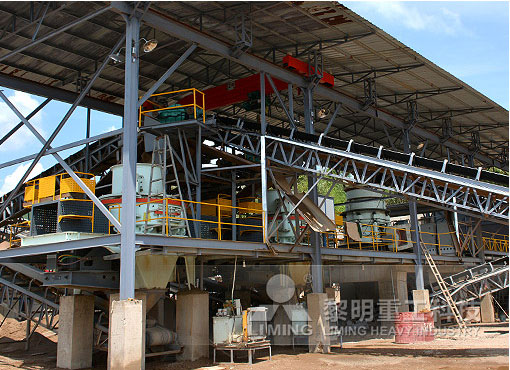
5.Are there any fully automated/robotic mines for lithium?
While not yet fully robotic,major hard rock mines like Greenbushesand Wodginain Australia employa high degreeof automation.This includes autonomous haul trucks(GPS-guided),remote-controlled drilling rigs,and highly automated processing plants with centralized control rooms.Automation improves safety,efficiency,and precisionin material handlingand processing,but human oversightremains criticalfor maintenanceand complex decision-making