
necessity of artificial sand
The Necessity of Artificial Sand: A Modern Construction Imperative
The global construction industry is undergoing a fundamental shift in its primary material sourcing, driven by the escalating scarcity of natural river sand. The necessity of artificial sand—also known as manufactured sand or M-sand—has transitioned from a niche alternative to a critical mainstream solution. Produced by mechanically crushing rocks, granite, or industrial by-products into fine, angular particles, artificial sand addresses severe environmental, economic, and quality control challenges associated with uncontrolled river sand mining. This article outlines the compelling reasons for its adoption, supported by comparative analysis and real-world applications.
The depletion of natural sand reserves is a global environmental crisis. Unsustainable dredging from riverbeds leads to erosion, loss of biodiversity, groundwater depletion, and damage to infrastructure like bridges. In contrast, artificial sand is typically produced from locally quarried rock or industrial waste (like slag), eliminating ecological damage to waterways. From a quality perspective, M-sand offers superior consistency and control over particle shape and gradation.
The following table contrasts key characteristics: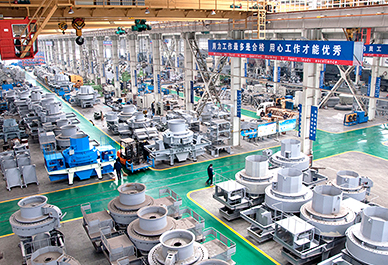
| Aspect | Natural River Sand | Artificial Sand (M-sand) |
|---|---|---|
| Source & Impact | Dredged from rivers; causes erosion & ecological harm. | Crushed from rock/quarry waste; conserves natural waterways. |
| Particle Shape | Rounded, smooth. | Angular & cubical, providing better interlocking. |
| Gradation Control | Irregular, varies by location & depth; often contains silt & clay. | Precisely controlled during manufacturing; consistent size distribution. |
| Moisture Content | Often high and unpredictable. | Virtually zero (can be controlled), simplifying mix design. |
| Availability & Cost | Geographically limited; cost rising due to regulations & scarcity. | Can be produced locally near demand centers; long-term cost stability. |
A critical advantage lies in engineering properties. The angular shape of M-sand particles enhances the compressive strength and durability of concrete by improving the bond with cement paste. It also reduces segregation and bleeding in fresh concrete, leading to more durable structures.
Real-World Case Study: India's Proactive Adoption
Facing a severe sand shortage and environmental degradation, the state of Karnataka in India mandated the use of manufactured sand in all major government infrastructure projects in the early 2010s. A prominent example is the construction of the Bangalore Metro Rail (Phase 1 & 2). Contractors extensively used high-quality granite-based M-sand for structural concrete.
- Process: Granite from local quarries was crushed in vertical shaft impact (VSI) crushers to achieve the desired cubical shape, followed by washing and grading to remove excess fines.
- Outcome: The project reported consistent concrete strength (exceeding target MPa), reduced cement consumption due to better particle packing, and assured supply without logistical delays. This large-scale application demonstrated that with proper manufacturing standards, M-sand can reliably replace river sand even in critical infrastructure.
FAQ
-
Does artificial sand weaken concrete?
No, when produced to proper standards (like IS 383 in India or ASTM C33 equivalents), it strengthens concrete. Its angular particles create a stronger mechanical bond than rounded natural sand. However, poorly graded or excessively flaky M-sand can require adjustments in mix design..jpg)
-
Is artificial sand more expensive than natural sand?
Initially, the setup cost for processing plants can make M-sand slightly more expensive in some markets. However, considering the volatile and skyrocketing price of legally sourced river sand due to taxes and transportation, along with its consistent quality reducing material variability and waste, M-sand often proves more cost-effective over a project's lifecycle. -
Can artificial sand be used for plastering?
Yes, but it requires specific grading (finer particles) and proper preparation. Plastering-grade M-sand must be well-washed to control micron-level fines (stone dust). Its angularity can improve plaster bonding but may require slight increases in cement content or use of plasticizers for better workability compared to smooth river sand. -
What are the environmental benefits beyond protecting rivers?
Artificial sand production can utilize waste materials like quarry dust or slag from steel plants (producing "slag sand"), reducing industrial waste going to landfills. It also lowers the carbon footprint associated with long-distance transportation of natural sand. -
Are there any major structures built using artificial sand?
Yes, globally numerous large projects use it extensively beyond the cited Bangalore Metro example . Many high-rise buildings in urban centers across China , Dubai , and Texas , USA , utilize manufactured sands where local natural sources are insufficient or banned . Modern crusher technology allows tailoring sands for high-performance applications like self-compacting concrete .
In conclusion,the necessityofartificialsand is no longer debatable but a practical imperativefor sustainable development.It presentsa viable,economical,and technically superior solutionthat mitigatesenvironmental damagewhile meetingthe rigorous demandsof contemporaryconstruction.The industry's future hinges on widespread adoptionand continued refinementofM-sandproduction standardsglobally