
new crusher plant cost in india
The Cost of Setting Up a New Crusher Plant in India: A Comprehensive Analysis
Establishing a new crusher plant in India is a significant capital investment, with costs influenced by a complex interplay of factors. This article provides a detailed overview of the primary cost components, from equipment and machinery to operational and regulatory considerations. It aims to offer a realistic financial framework for investors and entrepreneurs by breaking down expenses, comparing different plant configurations, and presenting real-world data.
Primary Cost Components of a Crusher Plant
The total investment can be broadly categorized into fixed capital investment (FCI) and working capital. The FCI is the most substantial part.
1. Machinery & Equipment (40-60% of FCI): This is the core cost. It includes:
- Primary Crusher: Jaw crushers, gyratory crushers.
- Secondary & Tertiary Crushers: Cone crushers, impact crushers.
- Screening Equipment: Vibrating screens.
- Feeders & Conveyors: Apron feeders, vibrating grizzly feeders (VGF), belt conveyors.
- Additional Equipment: Sand classifiers (for manufactured sand plants), dust suppression systems, control panels.
2. Civil Works & Infrastructure (15-25% of FCI): Land development, foundations for machinery, roads within the plant, drainage systems, boundary walls, and office/labour shelters.
3. Land Cost (Highly Variable): Cost depends entirely on location—proximity to quarry/feed source, connectivity to market, and state-specific land rates. Leasing is a common alternative to purchase.
4. Electrical & Installation (10-15% of FCI): Electrical cabling, transformers, motors, and the cost of erecting and commissioning the plant.
5. Permits & Licenses (5-10%): Crucial and often time-consuming. Includes environmental clearance (EC), consent to establish/operate from State Pollution Control Board (SPCB), mining lease or quarry permit, explosives license (if needed), and local municipal approvals.
6. Working Capital: Covers initial raw material stockpile, fuel, labour salaries, spare parts inventory, and other day-to-day operational expenses for the first 3-6 months..jpg)
Cost Comparison: Small vs. Medium-Scale Plant
The following table provides an estimated cost range based on capacity scale. These are approximate figures for a stationary plant; highly mobile setups or large-scale integrated plants will differ significantly.
| Cost Component | Small Scale Plant (100-150 TPH) | Medium Scale Plant (200-300 TPH) | Notes |
|---|---|---|---|
| Plant Capacity | 100 - 150 Tonnes Per Hour | 200 - 300 Tonnes Per Hour | TPH = Tons per hour |
| Estimated Total Investment Range | ₹ 2 Crores - ₹ 4 Crores | ₹ 4 Crores - ₹ 8+ Crores | Highly dependent on automation & equipment choice |
| Primary Equipment Cost | ₹ 80 Lakhs - ₹ 1.8 Crores | ₹ 1.8 Crores - ₹ 4 Crores | Skewed by brand (Indian vs. International) |
| Typical Setup | Jaw Crusher + Cone Crusher + Screens + Conveyors | Jaw Crusher + Cone Crusher(s) + Screens + VGF + Advanced Conveying | Medium plants often include more stages for better product shaping |
| Land Area Required | 1 - 2 Acres | 2 - 5 Acres | Must account for raw material & finished product stockpiles |
| Key Permit Focus | SPCB Consent, Local Licenses | Environmental Clearance (EC) mandatory for larger capacities, SPCB Consent |
Real-World Case Study: Granite Crushing Plant in Tamil Nadu
A project was set up in Krishnagiri district to produce aggregates and M-Sand from granite rock.
- Capacity: 250 TPH.
- Configuration: Primary Jaw Crusher → Secondary Cone Crusher → Tertiary Cone Crusher for shaping → Vertical Shaft Impactor (VSI) for M-Sand → Multiple Screening Decks.
- Major Cost Insights:
- The machinery package from a reputed Indian OEM accounted for approximately ₹ 3.2 Crores.
- Civil works and foundational work cost nearly ₹ 1.1 Crores due to rocky terrain requiring blasting.
- Obtaining the Environmental Clearance (EC) took about 8 months, delaying the project timeline but being essential for legal operation at this scale.
- A sophisticated dust suppression system (fog cannons & water sprinklers across conveyors) added ~₹ 25 Lakhs but was critical for obtaining the Pollution Board's Consent to Operate.
- The total project cost approached ₹ 7 Crores before operational capital.
Frequently Asked Questions (FAQs)
Q1: What is the single biggest factor affecting crusher plant cost?
A: The choice of machinery—its capacity, technology level, and brand—is typically the largest cost determinant. Opting for fully automated PLC-controlled systems with international brands can double equipment costs compared to semi-automatic units from domestic manufacturers.
Q2: Are there any hidden costs often overlooked?
A: Yes. Two major ones are: (1) Logistics & Transportation of massive equipment to the site can be substantial if the site is remote. (2) Spare Parts Inventory: Initial stocking of critical spares like jaw plates, cone mantles, conveyor belts requires significant upfront capital that is often underestimated.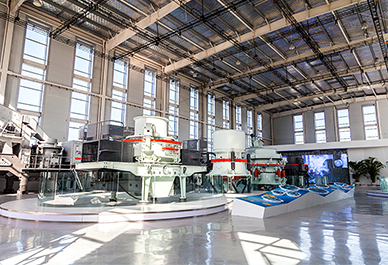
Q3: How long does it take to get all necessary permits?
A: The timeline can vary from 6 to over 12 months. For plants below certain thresholds requiring only SPCB consent it may be faster (~3-4 months). Plants mandating Environmental Clearance must go through a detailed process including public hearings which extends the timeline considerably.
Q4: Can I reduce cost by buying used/second-hand equipment?
A: While it reduces initial outlay by ~30-50%, it carries higher risks: uncertain maintenance history leading to frequent breakdowns lower availability lower production output difficulty in sourcing old-model spares higher long-term operating costs
Disclaimer: The figures provided are estimates based on industry benchmarks project reports published tenders as well as discussions with sector professionals Actual costs vary depending on specific location market conditions at time purchase chosen vendors final plant design Investors must conduct detailed feasibility studies vendor quotations before finalizing any investment.