
screening of nickel ore
Screening in Nickel Ore Processing: An Overview
Screening is a fundamental and critical unit operation within the nickel ore processing circuit. Its primary function is to separate mined nickel ore into distinct size fractions based on particle size. This separation serves multiple essential purposes: removing fine materials that may hinder downstream processes, preparing optimally sized feed for crushers, improving the efficiency of beneficiation stages like flotation, and ensuring final product specifications are met. The effectiveness of screening directly impacts overall plant throughput, recovery rates, operational costs, and the quality of the final nickel concentrate or product. This article outlines the key methods, equipment considerations, and practical applications of screening in nickel mining..jpg)
Screening Methods and Equipment Selection
The choice of screening technology depends heavily on the characteristics of the nickel ore (moisture content, clay presence, particle size distribution) and its location in the processing flow. Two main categories are employed:
- Dry Screening: Used for relatively dry, free-flowing ores. It is typically employed for coarse size separation after primary crushing or for final product sizing.
- Wet Screening: Involves the addition of water sprays to the screen deck. This is crucial for handling sticky, clay-rich lateritic nickel ores or moist ores, as it prevents blinding (blockage of screen apertures) and facilitates the separation of fines.
The selection of screen type involves balancing feed characteristics, capacity requirements, and separation efficiency. Key equipment includes:
| Screen Type | Principle | Best Suited For | Advantages | Limitations |
|---|---|---|---|---|
| Vibrating Screens (Horizontal & Inclined) | High-frequency vibration to stratify and convey material. | High-capacity sizing/scalping; widely used for both lateritic and sulphidic ores. | Robust, high capacity, multiple deck options for several fractions. | Can be less effective with very sticky materials without water sprays. |
| Trommel Screens (Rotary Screens) | A rotating cylindrical drum with perforations. | Scrubbing & sizing of clayey lateritic ores; desliming. | Excellent handling of sticky materials; provides some scrubbing action to break down clumps. | Lower capacity per unit area than vibrating screens; larger footprint. |
| High-Frequency Screens | Very high vibration frequency with low amplitude. | Fine wet screening (<1mm), dewatering, and recovery of fines from slurries. | High efficiency in fine separations; good dewatering capability. | Higher wear on screens due to frequency; lower capacity for coarse feeds. |
The Role of Screening in Different Nickel Ore Types
Screening strategies differ significantly between the two primary types of nickel ores: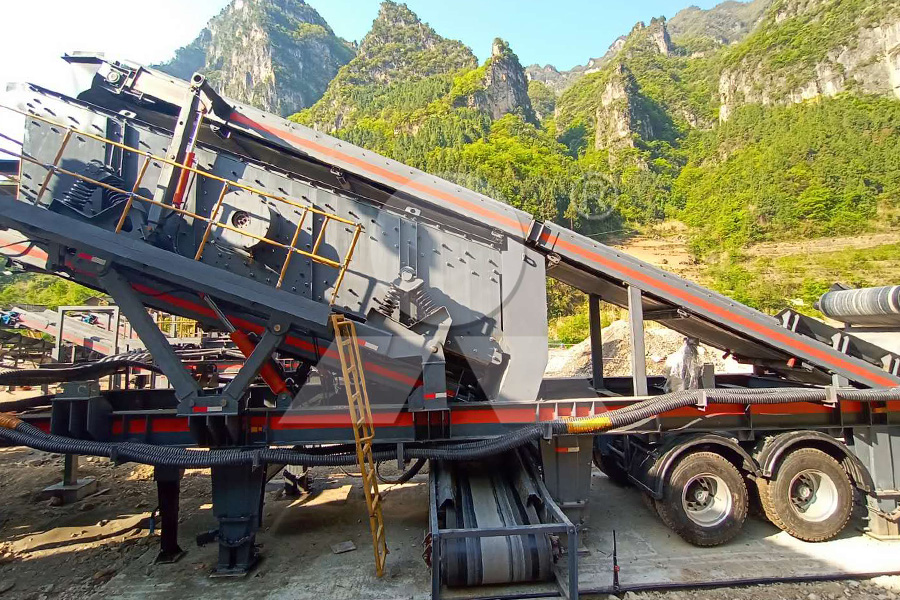
-
Sulphide Nickel Ores: Screening is primarily used in a crushing circuit to ensure correct feed size for grinding mills (e.g., SAG/Ball mills). Removing fines before further crushing (scalping) improves crusher efficiency. It may also be used post-grinding to control cyclone feed size.
-
Lateritic Nickel Ores (Oxides): Screening plays a more diverse role due to the heterogeneous, clay-bound nature of the ore.
- Scalping: Removal of oversize (>50mm) before crushing.
- Desliming: Critical step to remove fine clay (-0.1mm or -0.075mm) which consumes excessive reagents in subsequent High-Pressure Acid Leach (HPAL) or Caron process steps and impedes filtration.
- Size Classification for Beneficiation: Preparing specific size fractions for processes like ferronickel smelting or heap leaching.
Real-World Application: The Ambatovy Project, Madagascar
The Ambatovy nickel-cobalt mine in Madagascar provides a clear case study on the critical importance of tailored screening in lateritic ore processing.
- Challenge: The lateritic ore profile contains significant soft saprolite and sticky limonite layers with high clay content.
- Solution & Screening Application: The plant employs a multi-stage washing and screening circuit ahead of its HPAL process.
- Primary crushed ore is mixed with water in scrubbers to break down clay agglomerates.
- The slurry is then processed through a series of trommel screens and vibrating screens configured for wet screening.
- These screens rigorously remove fine slimes (-0.075mm). The undersize slimes are sent to tailings management, while the washed coarse fraction (+0.075mm) becomes feed for the downstream HPAL autoclaves.
- Outcome: This intensive screening/desliming stage was essential to design specifications. It reduces acid consumption during leaching, improves metal recovery by eliminating fine particles that can entrain or react poorly, and enhances slurry rheology for pumping and autoclave operation.
Frequently Asked Questions (FAQs)
Q1: Why is desliming so crucial for processing lateritic nickel ores?
Desliming removes fine clay particles that have a very high surface area but low nickel content relative to coarser particles . In hydrometallurgical processes like HPAL , these clays consume large quantities of expensive sulfuric acid without contributing proportionally to metal recovery . They also create severe challenges in solid-liquid separation , leading to poor filterability and thickener performance . Effective screening-based desliming directly controls operational costs .
Q2: What are common problems encountered during nickel ore screening ,and how are they mitigated?
The most common issue is screen blinding , where moist or clayey particles stick and block screen apertures . Mitigation strategies include:
- Using wet screening with strategically placed water sprays .
- Selecting screen types with anti-blinding devices such as ball trays (where rubber balls bounce against the underside ofthe mesh to dislodge material )or flexible urethane screen panels .
- Applying heated decks or specialized screen surface coatingsfor sticky materials .
Q3: How does screening contribute to overall plant economics ?
Efficient screening optimizes downstream process performance . By providing correctly sized feed , it maximizes crusherand grinding mill throughput , reduces overgrinding ,and lowers energy consumption . In beneficiation ,it ensures optimal particle sizefor physical separationor leaching kinetics ,thereby improvingnickel recovery . Proper removalof waste fines early inthe circuit alsoreduces loadand reagent costs on subsequent units .
References & Industry Standards:
- Crundwell,F.K.,Moats,M.S.,Ramachandran,V.,Robinson,T.G.,&Davenport,W.G.(2011). Extractive Metallurgyof Nickel,Cobaltand Platinum-Group Metals. Elsevier.
- Oxley,A.,& Barcza,N.(2013). Hydro-pyro integrationin the processingof nickel laterites.Minerals Engineering,54,pp .2-13 .
- Process flowsheetsand technical descriptionsfrom major EPCM contractors(FLSmidth ,Metso Outotec )for nickelscreening applications .
- Technical overviewsfrom mining operationssuch as Sorowako(Pomalaa),Goro(Vale New Caledonia),and Ravensthorpe .