
single impact crusher
Single Impact Crusher: An Overview
A single impact crusher is a type of crushing machinery that utilizes the principle of impact to reduce the size of materials. It operates by feeding material into a chamber where a high-speed rotor with blow bars or hammers strikes the incoming feed, throwing it against stationary anvils or breaker plates. This action causes the material to fracture along its natural cleavage lines, resulting in a well-shaped, cubical product. This article provides a detailed examination of its working mechanism, compares it with other crusher types, presents a real-world application, and addresses common questions..jpg)
Working Principle and Key Components
The core operation involves a high-speed rotor assembly rotating within a robust housing. The feed material is introduced into the crushing chamber. As the rotor spins, the mounted blow bars impact the rocks with tremendous force. The shattered pieces are then propelled against the adjustable impact aprons or breaker plates for secondary fragmentation. The final product size is controlled primarily by the speed of the rotor and the gap setting between the blow bars and the impact aprons. A key advantage is the adjustable nature of these aprons and often the inclusion of a hydraulic or mechanical system for opening the housing for maintenance and clearing blockages.
Comparison with Other Primary Crushers
While jaw and cone crushers primarily use compressive force, impact crushers rely on dynamic impact. The choice between them depends on material characteristics and desired product shape.
| Feature | Single Impact Crusher | Jaw Crusher | Cone Crusher |
|---|---|---|---|
| Crushing Action | Dynamic Impact (High Speed) | Compressive Squeezing | Compressive Squeezing & Shearing |
| Product Shape | Excellent. Highly cubical, fewer flaky particles. | Moderate to Poor. More elongated, slabby particles. | Good. Generally cubical but can be flaky in closed settings. |
| Feed Size | Moderate. Best for medium-hard to non-abrasive materials (e.g., limestone, asphalt). | Very Large. Handles the largest feed sizes, highly abrasive materials. | Large to Medium. Handles hard and abrasive materials well. |
| Wear Cost | Higher for abrasive materials (wear on blow bars & aprons). | Lower wear cost per ton for very hard/abrasive rock. | Moderate wear cost; distributed across mantle and concave. |
| Sensitivity to Moisture | More sensitive; sticky/choky feed can cause clogging. | Less sensitive; can handle damp/clayey material better. | Sensitive; requires controlled feed moisture to prevent packing. |
Real-World Application: Limestone Quarry Operation
A limestone quarry in Texas, USA, required a primary crushing solution to process run-of-quarry limestone with a top size of 800mm down to a base material of 0-40mm with a high percentage of cubical chips for asphalt production.
- Challenge: The existing jaw crusher produced an excessive amount of elongated pieces unsuitable for high-quality asphalt mix.
- Solution: A primary single rotor impact crusher was installed as the sole primary crusher.
- Implementation: The crusher was equipped with heavy-duty blow bars and adjustable hydraulic aprons.
- Result: The plant achieved its target product specification consistently, with over 85% cubical product yield. The single-impact crusher setup simplified the circuit layout compared to a jaw-cone combination, reduced overall energy consumption per ton due to fewer crushing stages, and provided easier access for blow bar changes specific to their moderately abrasive limestone.
Frequently Asked Questions (FAQ)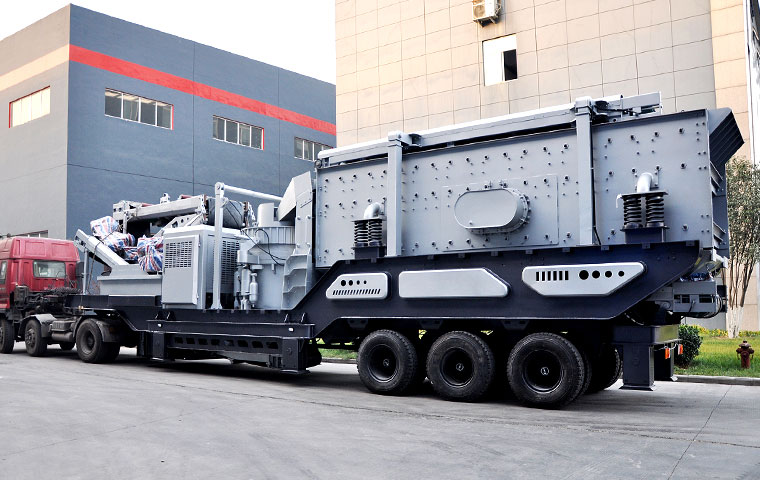
-
What are the main advantages of a single impact crusher?
Its primary advantages are its ability to produce a highly cubical end product—critical for concrete and asphalt aggregates—and its high reduction ratio capability in a single stage, which can simplify plant design and reduce capital cost for suitable materials. -
What materials are NOT suitable for an impact crusher?
Impact crushers are generally not recommended for very hard (e.g., granite, trap rock) or highly abrasive materials (e.g., some sandstones) as primary crushers unless specifically designed as such (e.g., solid rotor models). The wear costs on blow bars and liners become prohibitively high compared to compression-style crushers like jaws or cones. -
How does maintenance compare to other crushers?
Routine maintenance often involves more frequent changing of wear parts (blow bars, apron liners) than jaw dies or cone mantles when processing similar abrasive material. However, many modern designs facilitate easier access through hydraulic opening mechanisms, making these changes faster and safer than manual adjustments on some other crusher types. -
Can it handle recycled materials like concrete or asphalt?
Yes, single impact crushers are exceptionally well-suited for recycling applications like concrete demolition debris and reclaimed asphalt pavement (RAP). Their ability to break material along natural fault lines helps liberate rebar from concrete efficiently, and they produce clean, well-shaped aggregate from these materials. -
Is product size easily adjustable?
Yes, one of its key features is relatively easy adjustment via changing the setting of the impact aprons or breaker plates (often hydraulically), which alters the crushing chamber geometry and thus influences final product size without requiring major component changes like in cone crushers with different eccentric throws or liner profiles