
small mobile rock crusher
The Compact Powerhouse: A Deep Dive into Small Mobile Rock Crushers
In the world of aggregate processing and construction, the image of a massive, stationary crushing plant surrounded by conveyor belts has long been the standard. However, a quiet revolution has been reshaping the industry: the rise of the small mobile rock crusher. These agile, self-contained units are democratizing access to on-site crushing, offering unprecedented efficiency and flexibility for a wide range of projects.
Industry Background: The Need for Mobility and Efficiency
The traditional model of rock crushing involves hauling raw material from a quarry or demolition site to a central processing plant. This process is fraught with logistical challenges and hidden costs:
High Transportation Costs: Moving large volumes of rock is expensive, consuming fuel and requiring a fleet of trucks.
Site Congestion and Safety Concerns: Constant truck traffic creates safety hazards and disrupts workflow on active job sites.
Limited Access: Remote locations or confined urban sites often make transporting material to a fixed plant impractical or prohibitively expensive.
Environmental Impact: Hauling material increases carbon emissions and dust in local communities.
It was from these challenges that the mobile crusher was born. While large track-mounted units have existed for some time, it's the smaller, more compact versions that have truly unlocked new possibilities for smaller contractors, landscapers, and recycling specialists.
Core Product Anatomy: What Makes a Small Mobile Rock Crusher Tick?
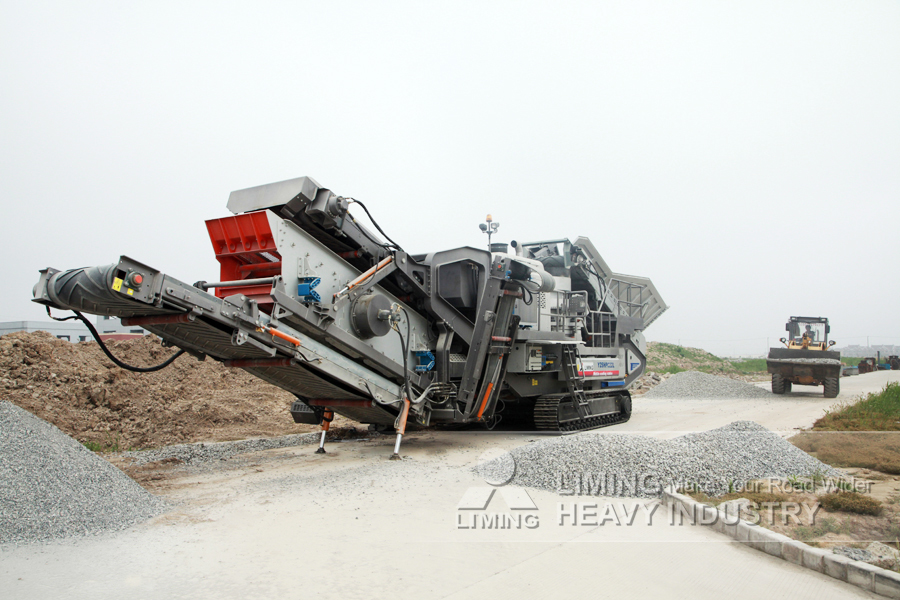
A small mobile rock crusher is an integrated system that combines three key functions—feeding, crushing, and stockpiling—onto a single chassis that can be towed or driven under its own power. Let's break down its core components:
1. The Chassis and Mobility:
The foundation is a robust chassis fitted with either tracks or wheels.
Track-Mounted: These offer superior mobility on rough terrain. With low ground pressure, they can navigate muddy or soft ground without sinking. Their hydraulic drive systems allow for precise positioning and even remote control in some models.
Wheel-Mounted (Trailer): Designed primarily for towing behind a truck or tractor, these are ideal for operations that require frequent movement between sites via public roads.
2. The Power Unit:
Most small crushers are powered by diesel engines, providing the necessary torque for demanding crushing tasks without reliance on external power sources. Electric-driven options are also available for indoor recycling applications or sites where noise and emissions are a primary concern.
3. The Crusher Itself – The Heart of the Machine:
This is where the action happens. Small mobile units typically use one of two primary crushing mechanisms:
Jaw Crushers: Utilizing two vertical jaws—one stationary and one that moves in a rocking motion—these are workhorses ideal for processing hard rock like granite or basalt. They excel at primary reduction, creating a more uniform, coarse aggregate.
Impact Crushers: These use high-speed rotors and hammers to "throw" the rock against breaker plates. They are exceptionally versatile, producing a well-shaped, cubical product perfect for concrete and asphalt aggregates. They are also the preferred choice for recycling applications like crushing concrete and asphalt rubble.
4. Feed and Discharge Systems:
An integrated vibrating feeder (or "grizzly") regulates the flow of material into the crusher, preventing overloads. Crushed material is then discharged via a main conveyor belt. Many advanced models feature an additional radial conveyor that can swing side-to-side, allowing operators to build large, sorted stockpiles without needing additional equipment.
Market Applications: Where Are These Machines Making an Impact?
The versatility of small mobile crushers has opened up lucrative opportunities across several sectors:
Construction & Demolition (C&D) Recycling: This is arguably their most powerful application. Instead of paying to landfill old concrete, asphalt, or bricks from demolition sites, contractors can crush it on-site into valuable base material for new foundations, road sub-bases, or backfill.
Small-Scale Quarrying: Landscapers and aggregate suppliers can process virgin rock directly at the source for producing gravels, decorative stone chips (e.g., decomposed granite), and other aggregates.
Land Clearing & Farming: For land development projects involving rocky terrain; instead of burying or hauling away boulders; they can be processed into useful fill or drainage material right on the property.
Utility & Pipeline Work: Laying pipes often requires specific bedding materials; with a mobile crusher; crews can create this material from excavated rock; drastically reducing import costs..jpg)
Tangible Benefits: The Bottom Line Advantage
Adopting this technology translates into direct financial and operational gains:
Dramatic Cost Reduction: Eliminate tipping fees at landfills and slash transportation costs by up to 80%.
Revenue Generation: Turn waste liability into sellable products like recycled aggregate.
Enhanced On-Site Efficiency: Process material exactly where it's needed; streamlining workflows and reducing project timelines.
Environmental Credibility: Significantly lower your carbon footprint by minimizing truck traffic; promote sustainable construction practices through recycling; which can be a powerful marketing tool.
The Future Outlook: Smarter; Cleaner; More Connected
The evolution of small mobile crushers is accelerating towards greater intelligence and sustainability:
Automation & Telematics: Remote monitoring systems will allow operators to track production; fuel consumption;and maintenance needs from their office.Crusher settings may auto-adjust based on feed material to optimize output.
Hybrid & Full-Electric Drives: As battery technology improves; fully electric compact crushers will become more common; offering near-silent; zero-emission operation ideal for sensitive urban environments.
Advanced Material Sorting: Integration with magnetic separatorsand air classifiers will allow single-pass processingof mixed C&D waste; separating rebar; wood;and plastics directly on the conveyor belt.
Frequently Asked Questions (FAQ)
Q1: What size of rock can it handle?
A: This varies by model,but most small jaw crusherscan accept feed sizes up to 20-24 inches.Small impactcrushers typically handle slightly smaller feed.It's crucialto match your typical feed material size tothe crusher's specifications.
Q2: What is the final product size?
A:The end product sizeis highly adjustable.Most machines have hydraulicor mechanical settings that allow operatorsto produce anythingfrom 2-inch down todust (often referredto as"crusher run"or"minus").
Q3: How much does one cost?
A:Prices vary widelybasedon capacity,brand,and features.A new unitcan range from $150;000to over $500;000.For smaller operations;high-quality used equipmentis oftena cost-effectiveentry point;typicallyin the $80;000to $250;000range.
Q4:What kindof maintenanceis required?
A:Routine maintenanceis straightforwardbut critical.It includes daily greasingof bearings;regular checkingand replacementof wear partslike jaw dies;impact hammers;and conveyor belts;and engine servicingas per themanufacturer'sschedule.Wear partcostsarea standardoperating expense.
Q5:Do I needany specialpermits to operateone?
A:Regulations varyby municipality.You will likelyneedto checklocal rules regardingnoise; dust emissions;and sometimesvibrations.Engagingwith local authoritiesbefore mobilizingthe equipmentis alwaysrecommended.Portable plantsoften face simplerregulationsthan fixedfacilitiesbutare notexempt.
Engineering Case Study
Project: Urban Redevelopment - Downtown Office Complex
Contractor: A&G Demolition & Excavation
Challenge: Demolish an old 5-story concrete structure ina dense urban area with limited spacefor stagingmaterial.Tipping feesatthe nearestlandfillwere exceptionallyhigh;andeach truckloadhauled awayincreasedtraffic congestionand projectcosts.
Solution:A&G deployeda Kleemann MC 100 R EVO track-mountedjawcrusher.The machine was set upona sectionofthe newly cleared site.The demolition crew fed pre-brokenconcrete slabsandreinforcedconcrete wallsdirectlyintoits feeder.
Process & Outcome:
1.Thecrusherprocessedover 12;000tons ofconcreteandrubbleon-siteoverthree weeks.
2.An integratedmagnetremovedrebarfor recyclingas scrap metal.
3.The finalproductwas screenedintotwo sizes:a 1½-inchminusfor useas road basefornew accessroadsonthe site;anda ¾-inchclean stonefor drainagebeddingaroundnew utilities.This eliminatedthe needto import over 500 truckloadsof virginaggregate.Result:A&G saved over $180;000in landfill tipping feesand avoided$95;000in material import costs.The projectwas completedaheadof schedule due toreducedtruck trafficand streamlinedlogistics.
In conclusion,the smallmobile rockcrusheris morethan justa pieceof machinery—it’sa strategicbusiness toolthat transformslogistical headachesintoprofitablerevenue streams.Its abilitytobringthe quarrytothe job siteempowerscontractorsof all sizesto work smarter,cleaner,and more efficientlythan ever before