
glass crushing process
Glass Crushing Process: An Overview
The glass crushing process is a fundamental stage in glass recycling and waste management, transforming discarded glass into a reusable material known as cullet. This mechanical operation involves breaking down glass containers, sheets, or other products into smaller, uniform fragments. The primary goals are to reduce volume for efficient transportation and storage, and to prepare the material for subsequent sorting, cleaning, and remelting in glass manufacturing furnaces or for alternative applications in construction and filtration. The efficiency and design of the crushing process directly impact the quality of the recycled product and its economic viability.
Stages of the Glass Crushing Process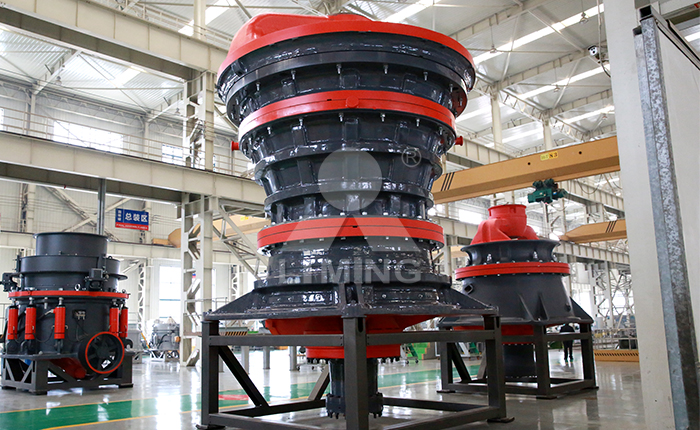
A systematic crushing line typically involves several key stages:
- Collection & Pre-sorting: Glass is collected (often separated by color—clear, green, amber) and non-glass contaminants like caps, lids, and ceramics are manually or mechanically removed.
- Primary Crushing: Large glass items are fed into a primary crusher, usually a jaw crusher or a gyratory crusher, which applies compressive force to break them into chunks roughly 50-100 mm in size.
- Secondary Crushing & Refinement: The coarse glass pieces are then processed by a impact crusher or a cone crusher. This stage further reduces the particle size to between 10-50 mm. Impact crushers are particularly common as they use high-speed impact rather than compression, producing sharper fractures and more uniform particles.
- Tertiary Crushing (if needed): For applications requiring very fine glass powder (cullet sand), a hammer mill or specialized grinder may be used to pulverize the material to sizes below 10 mm.
- Screening & Contaminant Removal: The crushed glass is passed over vibrating screens to separate it into specified size fractions. Advanced systems employ air classifiers, vacuum systems, or optical sorters to remove remaining lightweight (paper, plastic) or heavy (metals, stones) contaminants.
- Storage & Dispatch: The cleaned, sized cullet is stored in bunkers before being transported to glass plants or other end-users.
Crusher Type Comparison
The choice of crusher depends on the feed size, desired output, and throughput requirements.
| Crusher Type | Mechanism | Typical Input Size | Typical Output Size | Best For |
|---|---|---|---|---|
| Jaw Crusher | Compressive force between a fixed and a movable jaw. | Large fragments (>500mm) | Coarse (50-150mm) | Primary crushing of bulky waste glass or entire bottles. |
| Impact Crusher | High-speed impact from hammers/rotors against breaker plates. | Medium (100-500mm) | Uniform, cubical fragments (10-50mm) | Secondary crushing; produces well-shaped cullet for remelting. |
| Cone Crusher | Compression between a gyrating mantle and a concave bowl liner. | Medium (100-300mm) | Fine (10-30mm) | Secondary/Tertiary crushing for consistent granular output. |
| Hammer Mill | High-speed rotating hammers shatter glass against grates. | Small-Medium (<200mm) | Very Fine (<10mm) / Powdered Glass Sand (<3mm). |
Real-World Application: A Bottle-to-Bottle Recycling Plant
A prominent example is the closed-loop recycling system operated by Strategic Materials Inc. at their facility in Wilsonville, Oregon.
- Process: Collected mixed-color post-consumer glass undergoes rigorous sorting via optical sorters to separate by color. The sorted glass is then fed into a series of impact crushers and screens.
- Key Feature: Their process includes advanced drying and contamination removal systems after crushing to ensure ultra-clean cullet.
- Outcome: The resulting high-purity crushed cullet meets stringent specifications for chemical composition and contamination limits set by container glass manufacturers like Owens-Illinois (O-I). This cullet is then transported directly to O-I's nearby furnace in Portland, where it is melted alongside raw materials to manufacture new bottles—a true "bottle-to-bottle" recycling loop that saves energy and raw materials.
Frequently Asked Questions (FAQs)
1. Why is it important to crush glass by color before remelting?
Glass retains its color permanently because the coloring agents (e.g., iron for green, cobalt for blue) are integrated into its chemical structure. Mixing colors contaminates batches intended for clear (flint), green (emerald), or amber (brown) production. Clear glass has the highest purity requirements; even small amounts of colored cullet can render an entire batch unsuitable for clear container production.
2. What are the main uses for crushed recycled glass besides making new bottles?
Beyond furnace-ready cullet for container/fiberglass manufacturing ("closed-loop"), crushed glass has diverse "open-loop" applications:
- Construction: As an aggregate substitute in asphalt ("glasphalt"), concrete mixes ("glasscrete"), pipe bedding, and filtration media.
- Abrasives: Used in sandblasting media ("glass grit") and water filtration systems.
- Landscaping: As decorative mulch or inert filler material.
3.What are the biggest challenges in the glass crushing process?
The primary challenges are contamination removal and worker safety:.jpg)
- Contamination: Non-glass materials like ceramics (pyrex), stones, metals can cause defects in new bottles or damage furnace linings.
- Safety: The process generates dust (silica), noise, and sharp fragments requiring enclosed systems with dust suppression/collection units like baghouses proper PPE including respiratory protection hearing protection cut-resistant gloves
In conclusion,the modern industrial-scale process transforms waste into valuable feedstock through staged mechanical reduction rigorous cleaning Its integration within circular economy models as demonstrated by real-world partnerships between recyclers manufacturers underscores its critical role sustainable resource management