
washing machine for iron ore
Washing Machine for Iron Ore: An Overview
In the mining and mineral processing industry, the term "washing machine" refers not to household appliances but to specialized equipment designed to scrub, disintegrate, and clean iron ore. This process is crucial for removing impurities such as clay, silica, alumina, and other earthy materials that are loosely attached to the ore or mixed within its matrix. The primary goal is to improve the ore's Fe (iron) grade by reducing alumina and silica content (Al₂O₃ and SiO₂), thereby enhancing its value and reducing downstream processing costs in blast furnaces. Common equipment functioning as "washing machines" includes log washers, scrubbers, rotary trommel screens, and attrition cells. This article outlines the technology, compares key equipment types, presents a real-world case study, and addresses common questions about the process.
Key Equipment Comparison
Different types of "washing machines" are employed based on the nature of the impurities (friable or sticky) and the liberation size of the ore. The selection depends on factors like clay content, particle size distribution, and required throughput.
| Equipment Type | Primary Function | Typical Feed Size | Key Advantage | Best Suited For |
|---|---|---|---|---|
| Log Washer | Agitation & Abrasion | Up to 100mm | High shear force for tough clays; dual shaft design. | Cemented or tenacious clays and soft rock. |
| Rotary Scrubber | Tumbling & Scrubbing | Up to 150mm+ | High capacity; robust for large lumps. | Friable materials, disintegration of loosely bonded aggregates. |
| Trommel Screen | Scrubbing & Sizing | Up to 300mm+ | Combined washing and size classification in one unit. | Soils, weathered ores with simple clay removal needs. |
| Attrition Cell | Intensive Scrubbing & Desliming | <1mm (Slimes) | Efficient removal of surface coatings on fine particles. | Silica and alumina coatings on fine iron ore concentrates. |
Real-World Application: Noamundi Iron Ore Mine, India
A prominent example of iron ore washing is implemented at Tata Steel's Noamundi mine in Jharkhand, India. The mine processes lateritic iron ore (hematite) which is often contaminated with sticky clay and alumina-rich fines.
- Challenge: The run-of-mine (ROM) ore had high levels of adherent alumina and silica impurities, which lowered the Fe grade and increased the slag volume in blast furnaces.
- Solution: A multi-stage washing circuit was installed. The core "washing" stage utilizes rotary scrubbers. The ROM ore is fed into large rotating drums where it is tumbled vigorously with water. This action disintegrates the clay lumps and washes away the fine aluminous and siliceous materials.
- Process Flow: The scrubbed output is then passed to vibrating screens or hydrocyclones for classification. The coarser, cleaned lump ore (+10mm) is directly shipped as a product. The finer fraction undergoes further beneficiation (like spiral concentration) to produce high-grade fines concentrate.
- Outcome: This washing process consistently produces a lump ore product with an Fe content of ~63% and reduced alumina levels (<2.5%), meeting stringent quality specifications for steelmaking. It allows for economic utilization of otherwise sub-grade ores.
Frequently Asked Questions (FAQ)
-
Why can't we just crush iron ore and separate impurities without washing?
Many impurities, especially plastic clays and surface coatings, are not liberated by simple crushing. They form sticky masses that blind crushers and screens. Washing physically disintegrates these clay bonds and removes them as slurry before further processing, improving efficiency. -
Is water recycling important in iron ore washing plants?
Absolutely. Washing is water-intensive. Modern plants employ thickeners or tailings dams to settle out solid particles from the used water (process effluent). The clarified water is recycled back into the circuit significantly reducing freshwater consumption—a critical practice for environmental sustainability.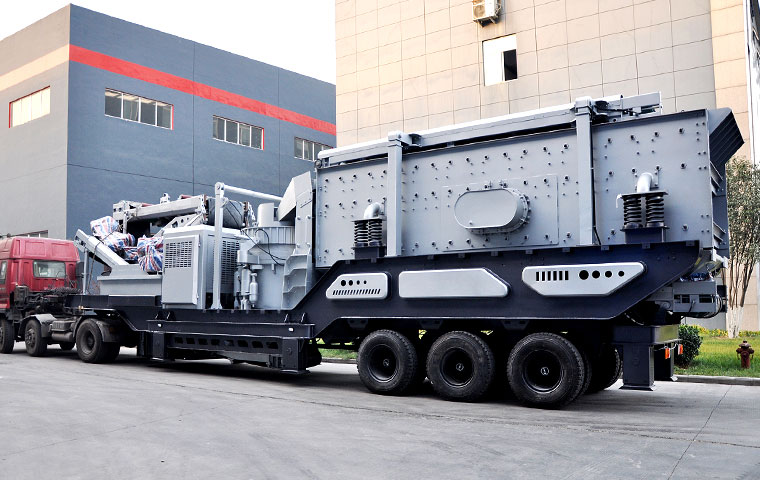
-
Does washing work for all types of iron ore?
No. It is most effective for hematite ores that are weathered or have friable gangue minerals like kaolinite clay or loose lateritic material (as in India, West Africa). It is less effective for hard massive ores where impurities are chemically bound or finely disseminated within the hematite itself; these require crushing and fine grinding followed by magnetic separation or flotation..jpg)
-
What happens to the waste generated from washing?
The washed-out ultrafine particles (slimes) containing low Fe content are typically pumped as slurry to engineered tailings storage facilities (TSFs). In some cases where slimes contain residual iron values they may be further processed through advanced techniques like selective flocculation.
5.What's a key operational challenge in running an iron ore scrubber/washer?
Wear is a major concern.The constant abrasion from tumbling rocks leads to significant wear on liners lifters discharge grates.This requires use of abrasion-resistant steels regular maintenance schedules monitoring liner thicknesses control operational costs